

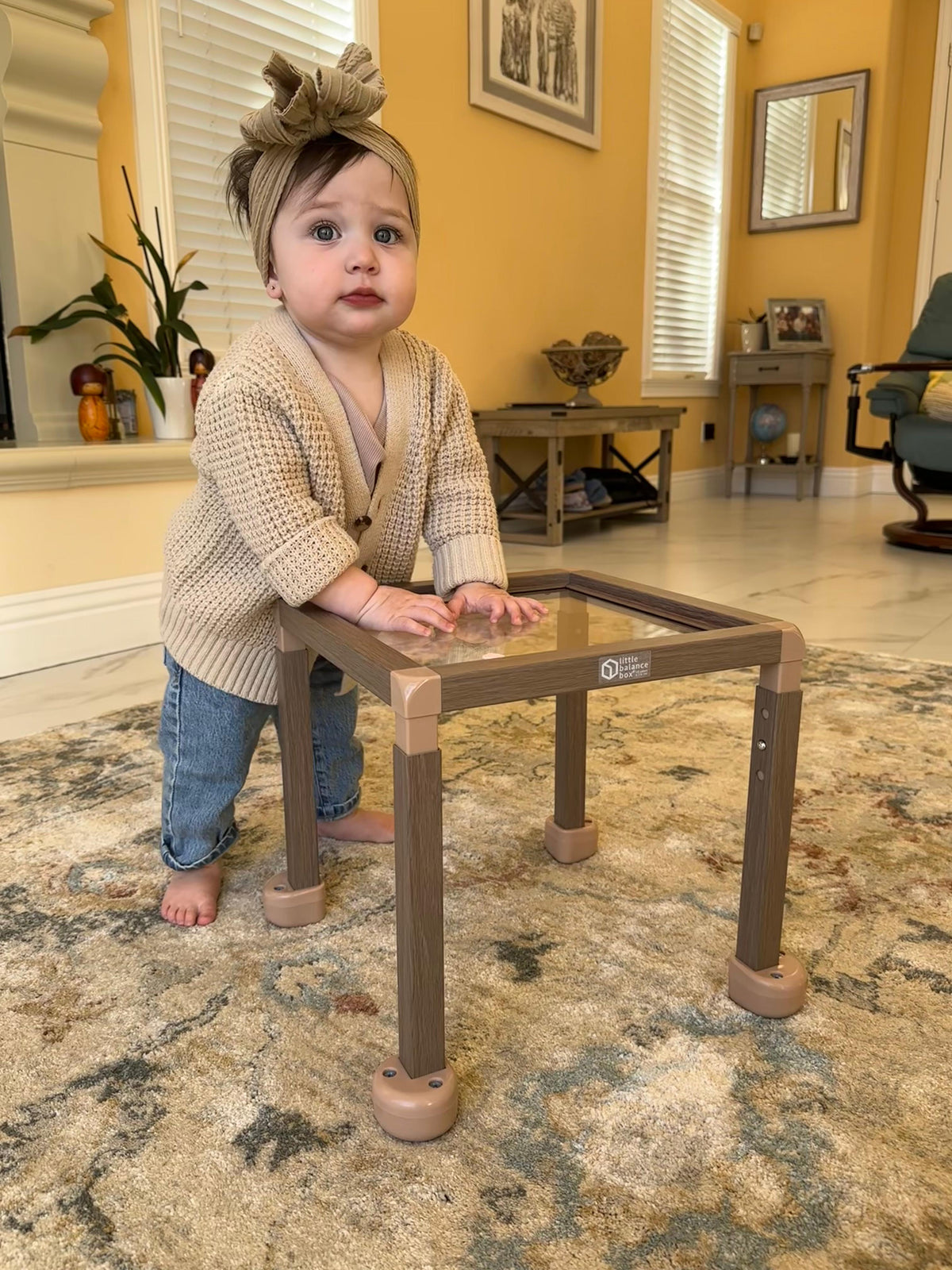
Why Babies Fall While Learning to Walk (And Why It’s Actually a Good Thing)
If you have a child who's learning to stand, cruise, or walk, you already know the soundtrack of this stage: a wobble, a thud, a pause, and then either a cry or — more often than you'd expect — a determined little attempt to try again.
It can be hard to watch. Every wobble can make your parent instincts kick in.
But here's the thing: falling is a normal and important part of learning to move. Babies learn balance through lots of practice, little wobbles, and yes, some safe tumbles along the way.
Falling Is Part of the Learning Process
Balance is a skill built through trial and error, and falling is simply part of that trial.
Every time your child loses their balance, their brain and body are gathering information: How far can I lean before I tip? How quickly do I need to react? Which muscles do I need to use to catch myself?
It's a little like their body is constantly saying, "Okay... that didn't work. Let's try that again."
What Falling Actually Teaches the Body
Protective reflexes: As babies develop, they begin learning how to protect themselves when they lose their balance, such as putting their hands out or adjusting their posture as they fall.
Balance and coordination: Each wobble gives their body another opportunity to practice making tiny adjustments to stay upright.
Risk awareness: Over time, children begin to recognize which movements feel stable and which feel a little too shaky, helping them become more confident movers.
Body awareness: Babies are learning where their body is in space and how it responds to movement. This is known as proprioception, and it plays an important role in developing coordination and movement skills.
Persistence: Sometimes the most impressive part isn't the first step — it's watching your little one get back up and try again.
Why You Don't Have to Prevent Every Fall
It's completely natural to want to swoop in the second your baby starts tipping over. That's your job as a parent, right?
But when your child is in a safe environment, allowing them some space to experience small wobbles and recover can give their body valuable opportunities to practice balance and protective responses.
That doesn't mean you should always let your baby fall or ignore a dangerous situation. Always stay nearby and supervise, and step in when a fall could result in injury. Babies should practice on a safe, clear surface away from stairs, hard edges, sharp corners, and other hazards.
Your Reaction Matters, Too
When your little one takes a tumble, your first instinct might be to gasp, yell, or rush over because it can be scary to watch. But babies often look to their parents to understand how they should react to a new situation. If every little wobble is met with panic, they may begin to associate falling or trying new movements with something being wrong.
Instead, when the situation is safe, try to stay calm and encouraging. A simple smile, "You're okay!" or "Good try!" can help your child feel safe enough to keep exploring.
That little "get back up and try again" moment is part of the learning process — and sometimes, it's the most important part.
The Bottom Line
Falling isn't a setback in your baby's walking journey — it's part of learning how to move.
Every wobble gives your baby's body an opportunity to practice balance, coordination, body awareness, and protective responses. With a safe space, close supervision, and a little room to practice, those falls can be an important part of your child's journey toward becoming a more confident mover.
So next time your little one takes a tumble, take a breath, offer a little encouragement, and remember that they’re learning with every wobble.
Share:
Your Baby’s Movement & Mealtime Milestones Are More Connected Than You Think — Now Bundled and On Sale
The Role of Motivation in Learning to Walk