


Why Confidence Matters When Children Learn to Walk
When children are learning to walk, it’s not just about strength — confidence plays a huge role.
Many children hesitate to take independent steps, not because they aren’t physically capable, but because they don’t yet feel stable or secure. That sense of uncertainty can slow down progress, even when all the foundational skills are there.
This is why balance and safe movement experiences are so important. The more opportunities a child has to practice in a supported, controlled way, the more confident they become in their ability to move through their environment.
Encouraging Movement Exploration
Early movement should feel natural, safe, and engaging.
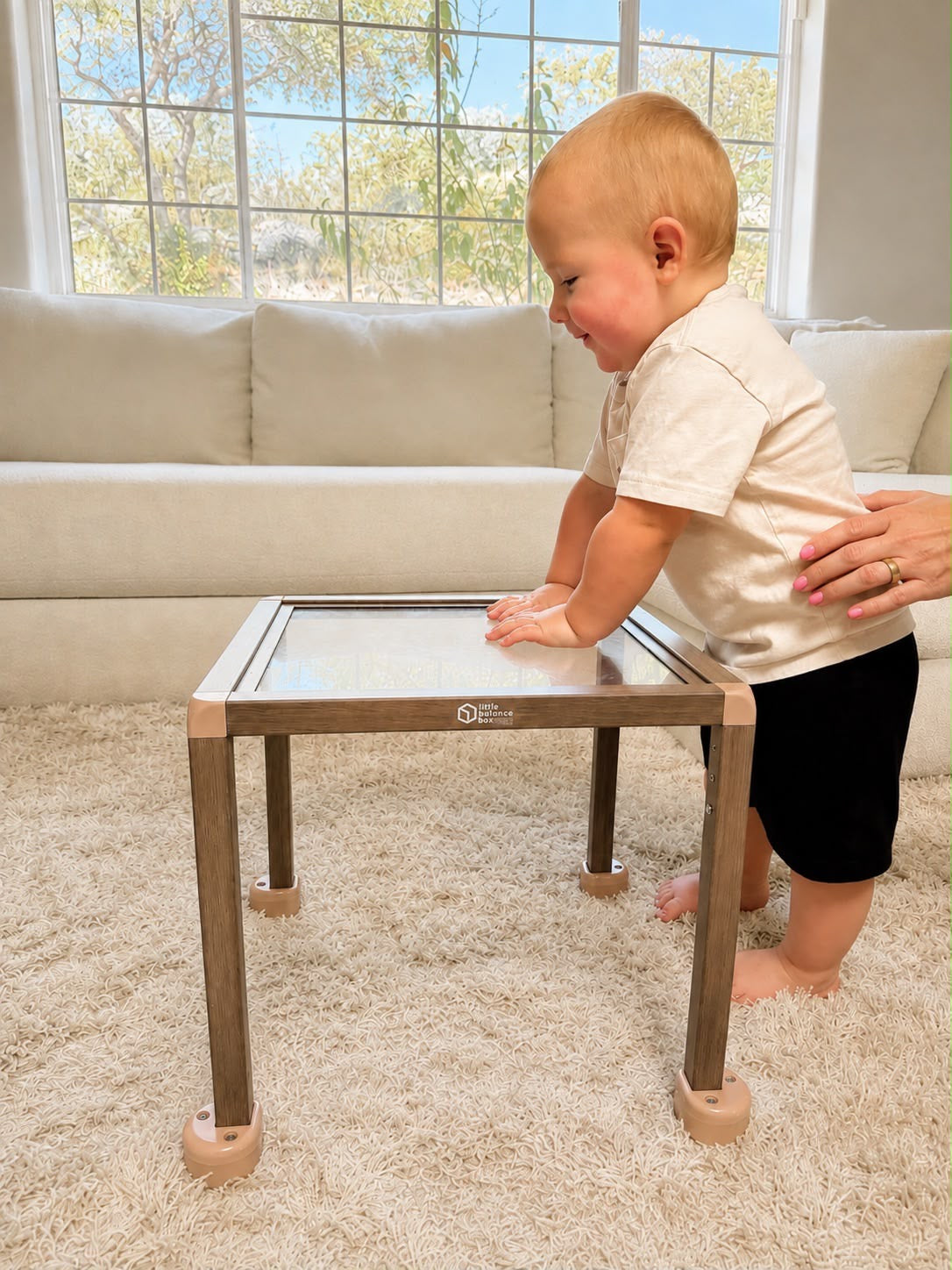
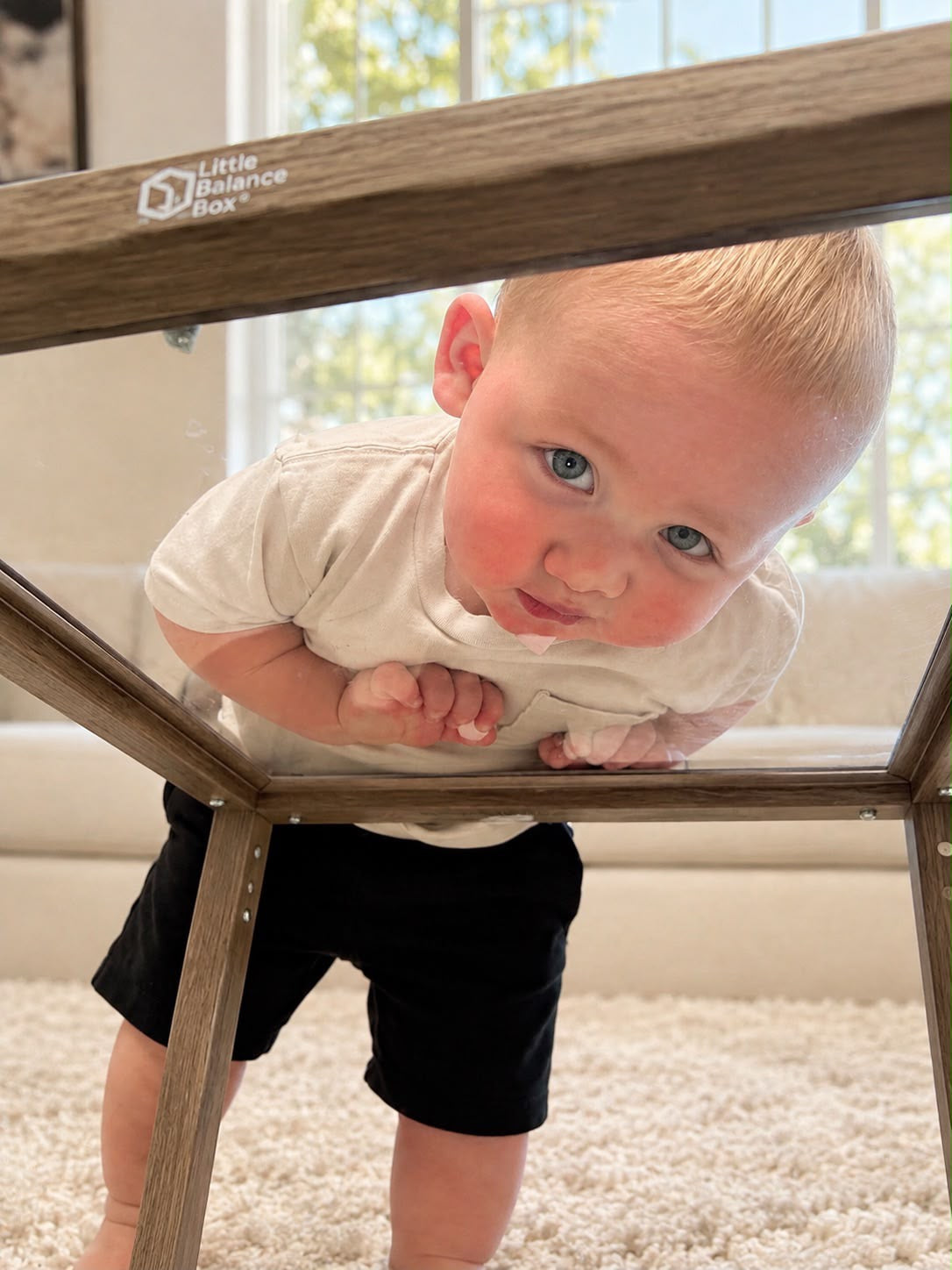
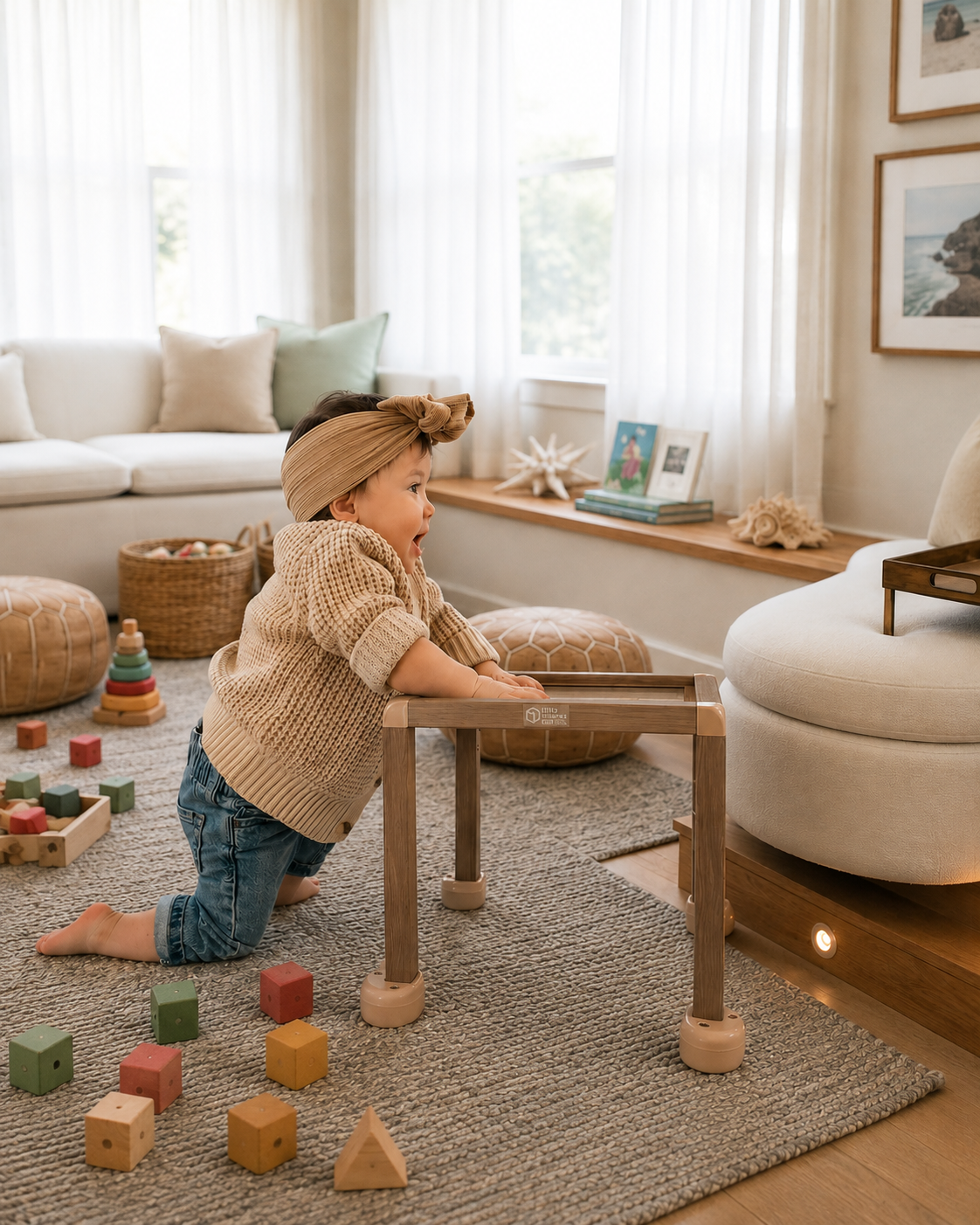
The Little Balance Box Grow encourages children to explore movement at their own pace. Instead of forcing steps, it allows them to initiate movement on their own, which is key for building both confidence and coordination.
As children interact with it, they naturally practice:
- Standing balance as they shift their weight
- Coordinated stepping as they move forward
- Directional movement as they explore their surroundings
This kind of self-led exploration helps children feel more in control of their bodies, which is essential for independent walking.
Building Core Strength Through Play
Walking starts from the center of the body. A strong core is what allows babies to stay upright, maintain balance, and recover from small wobbles.
Rather than isolated exercises, the most effective way to build this strength is through play-based movement.
When children push, lean, and shift their weight during play, they are naturally activating:
- Core muscles
- Pelvic stability
- Postural control
The Little Balance Box Grow supports this by encouraging children to push down into a stable surface, helping them develop strength in a way that feels intuitive and fun.
Supporting Early Development at Home
Many parents want to support their child’s development but aren’t sure where to start. The good news is that it doesn’t require complicated routines or structured programs.
Simple, everyday opportunities for movement can make a big impact.
The Little Balance Box Grow fits seamlessly into daily play, giving children the chance to practice balance, coordination, and movement skills in a familiar environment. It meets them where they are developmentally and supports progress over time.
Designed by a Pediatric Physical Therapist
What makes the Little Balance Box Grow unique is that it was designed by a physical therapist who understands how children develop movement skills. Every element of the design is intentional — from the stability it provides to the way it encourages natural movement patterns.
For families, this means having a tool that doesn’t just entertain, but actively supports development in a thoughtful and meaningful way.
Share:
When Do Children Start Walking? Milestones Parents Should Know
At-Home Balance Activities for Children (PT Guide)