

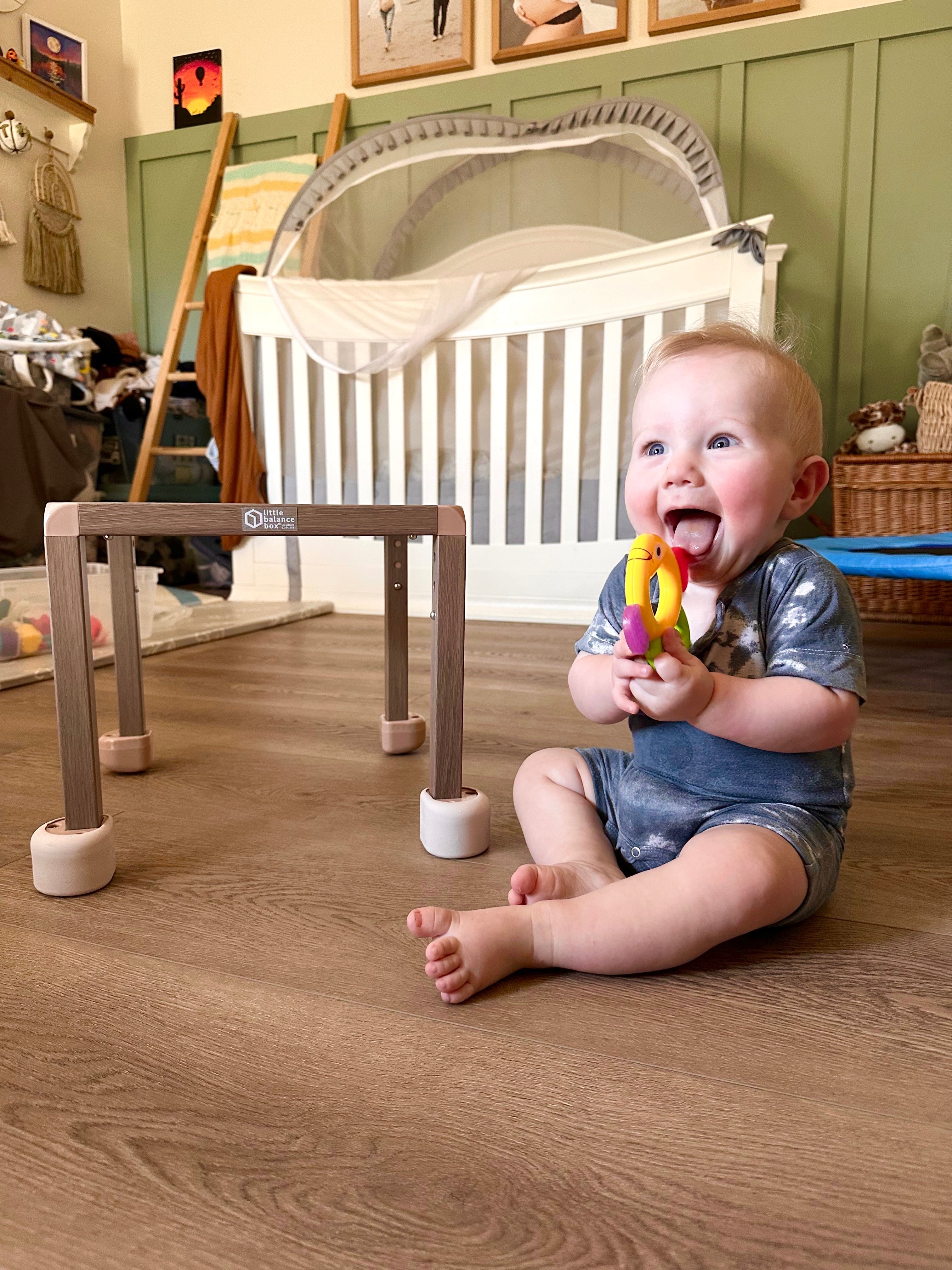
How Children Learn to Walk
Walking is one of the most exciting milestones in early childhood.
Before taking independent steps, children must develop several important skills:
• Balance control
• Leg strength
• Core stability
• Coordinated stepping
Learning to walk takes practice, repetition, and confidence. As babies spend time standing, cruising, and exploring movement, they gradually learn how to shift their weight, stabilize their body, and coordinate their steps. Every child develops at their own pace, and supportive movement opportunities can help build confidence along the way.
Why the Little Balance Box Grow Can Help
The Little Balance Box Grow was designed to support natural movement and early mobility development.
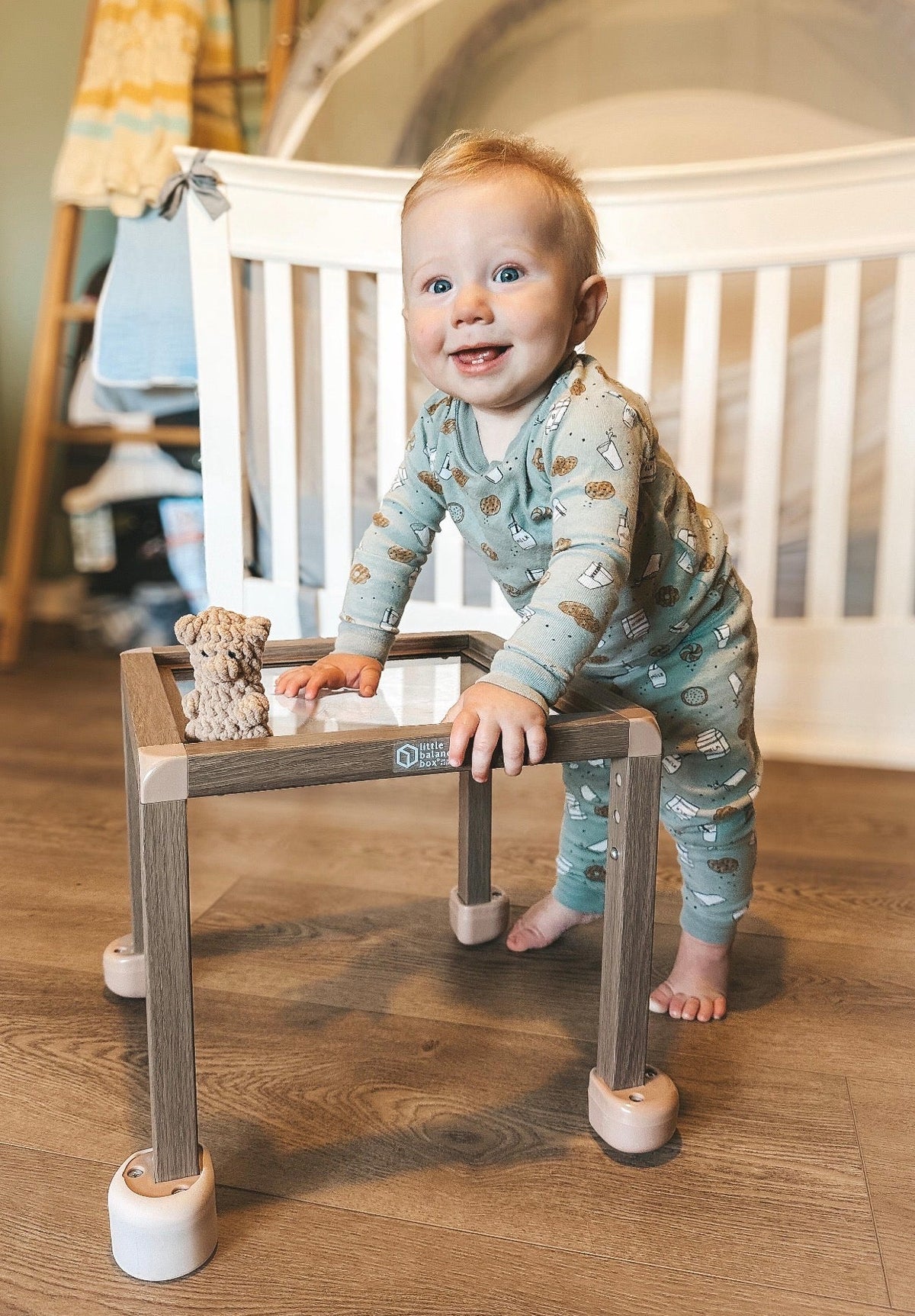
As children push forward, they naturally practice:
• Weight shifting
• Balance control
• Stepping coordination
Unlike traditional push walkers that can roll away too quickly, the Little Balance Box Grow was intentionally designed to stay within reach while children move. Its spring-loaded feet provide added stability and sensory feedback, helping children feel more aware of their body positioning during movement.
Because children control the movement themselves, the Little Balance Box Grow encourages learning through exploration while supporting safe, purposeful movement practice.
Why the Little Balance Box Grow Is Different
The Little Balance Box Grow was invented by pediatric physical therapist Dr. Shannon, PT, DPT, after noticing there wasn’t a truly safe push-walking option that supported development without rushing it.
A few features that make the Little Balance Box Grow unique include:
• Spring-loaded feet that help prevent the box from rolling away
• Flat top and lower height that support the kneel-to-stand transition
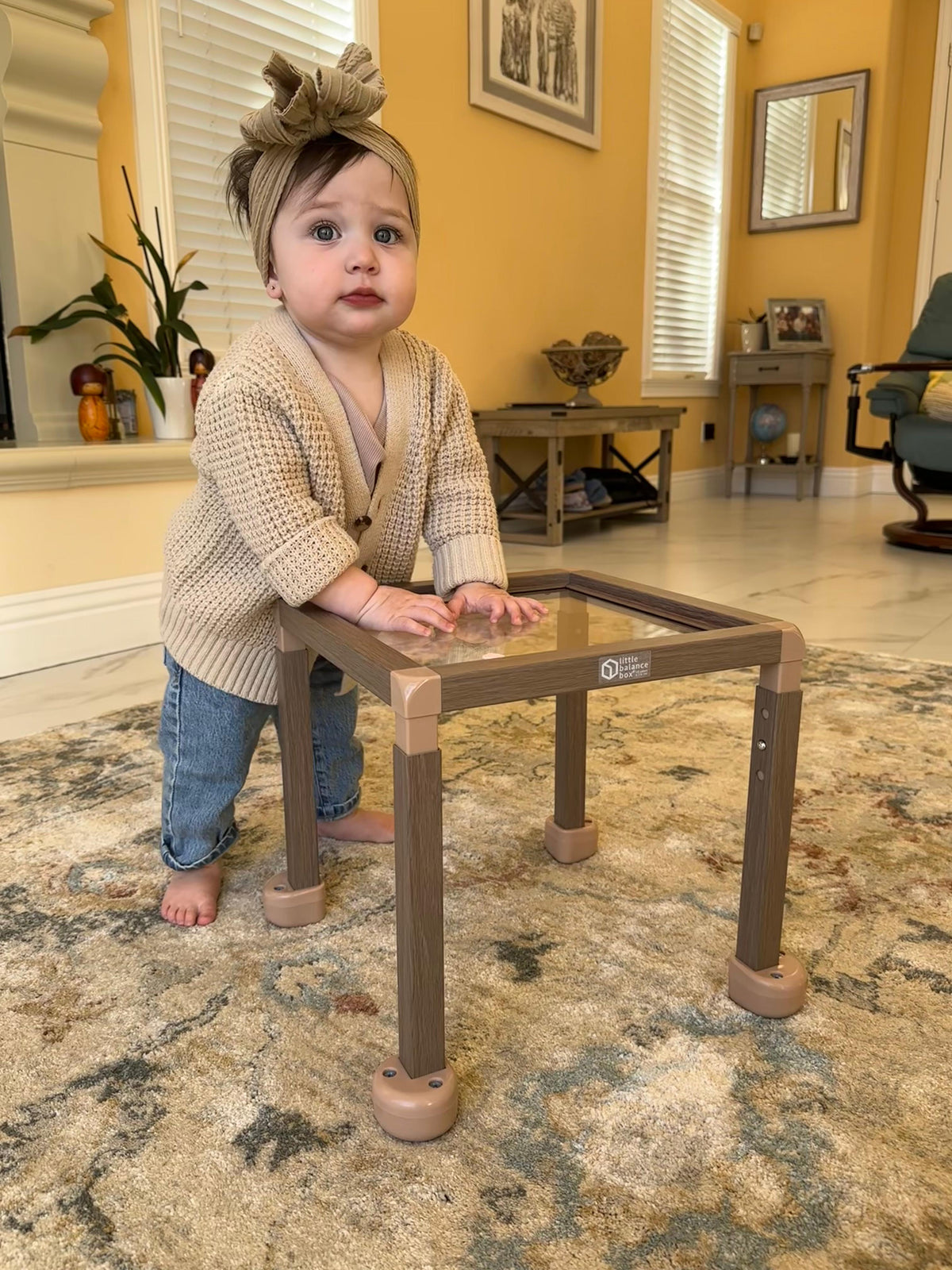
• 360° access that allows children to explore from all sides
• Smooth gliding across carpet, rugs, hardwood, and tile
• Adjustable height so it can grow with your child
The design also supports core strength, coordination, balance, and pelvic floor development, all of which are important for walking and long-term movement skills.
Many families use the Little Balance Box Grow during the stage when children are:
• Pulling to stand
• Cruising along furniture
• Beginning to experiment with independent steps
Encouraging Walking Confidence
With encouragement, practice, and safe opportunities for movement, children gradually develop the confidence needed for independent walking.
Developmentally supportive tools like the Little Balance Box Grow can help children practice movement skills naturally while building strength, stability, and confidence through play and exploration.
Share:
At-Home Balance Activities for Children (PT Guide)
My Child Won’t Walk Alone — What Parents Should Know