
A baby’s first steps are an exciting milestone. But what many parents don’t realize is that baby walking development begins months before those first independent steps happen.

Before babies can walk, their bodies must first develop several important foundational skills. These early abilities help babies learn how to control their bodies while standing and moving.

The most important skills before babies walk include:

Balance
Core and postural strength
Weight shifting
Coordination

These foundational skills allow babies to stabilize themselves, explore upright movement, and eventually develop the stepping patterns needed for walking.

Walking isn’t simply about moving forward — it’s about learning how to control the body while moving.


The Skills Babies Build Before Walking

During baby walking development, babies spend months strengthening their bodies and practicing movements that prepare them for walking.

Understanding what skills come before walking helps parents support this important stage of development.

Balance Development in Babies

Balance is a key part of baby balance development. When babies begin standing and exploring movement, they learn how to adjust their bodies as their center of gravity shifts.

These balance reactions allow babies to remain upright and eventually support the coordination needed for stepping.

Core Strength for Babies

Strong core muscles are essential for upright posture and stability. During supported standing, babies activate muscles in the core, shoulders, and pelvis that help stabilize the body.

Developing core strength for babies helps create the stable foundation needed for walking.

Weight Shifting and Coordination

One of the most important parts of how babies learn to walk is learning to shift their weight from one leg to the other.

Every step requires a baby to transfer their body weight while maintaining balance. Babies begin practicing this movement during standing play and early exploration.

Kneel-to-Stand Transitions

Another important milestone during baby standing development is the kneel-to-stand transition.

This movement strengthens the hips, legs, and core while helping babies practice bringing their body into an upright position. Repeating this transition helps prepare babies for cruising along furniture and eventually taking independent steps.


How Push Tools Can Support Early Walking Development

Many parents wonder what prepares children for their first steps.

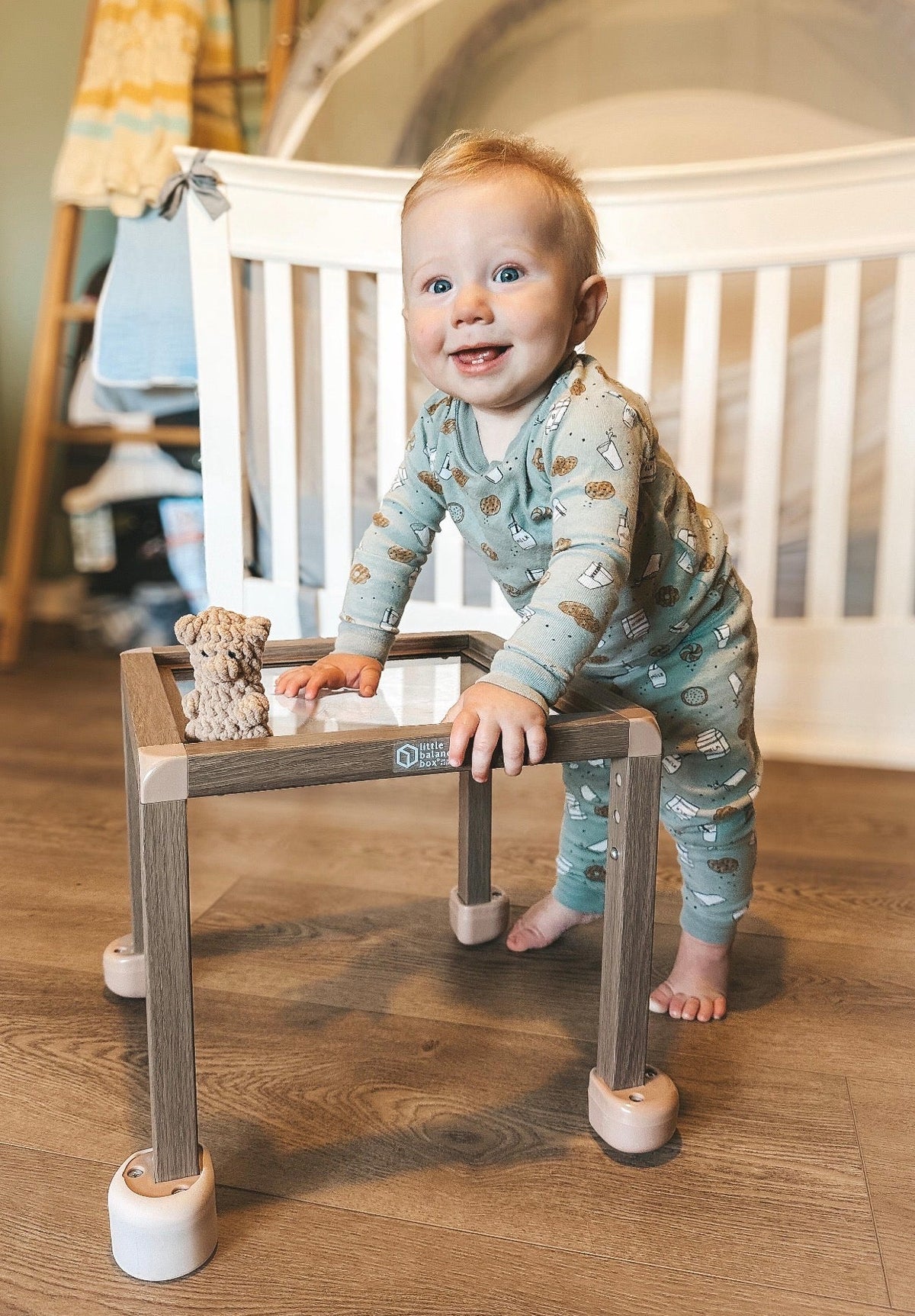
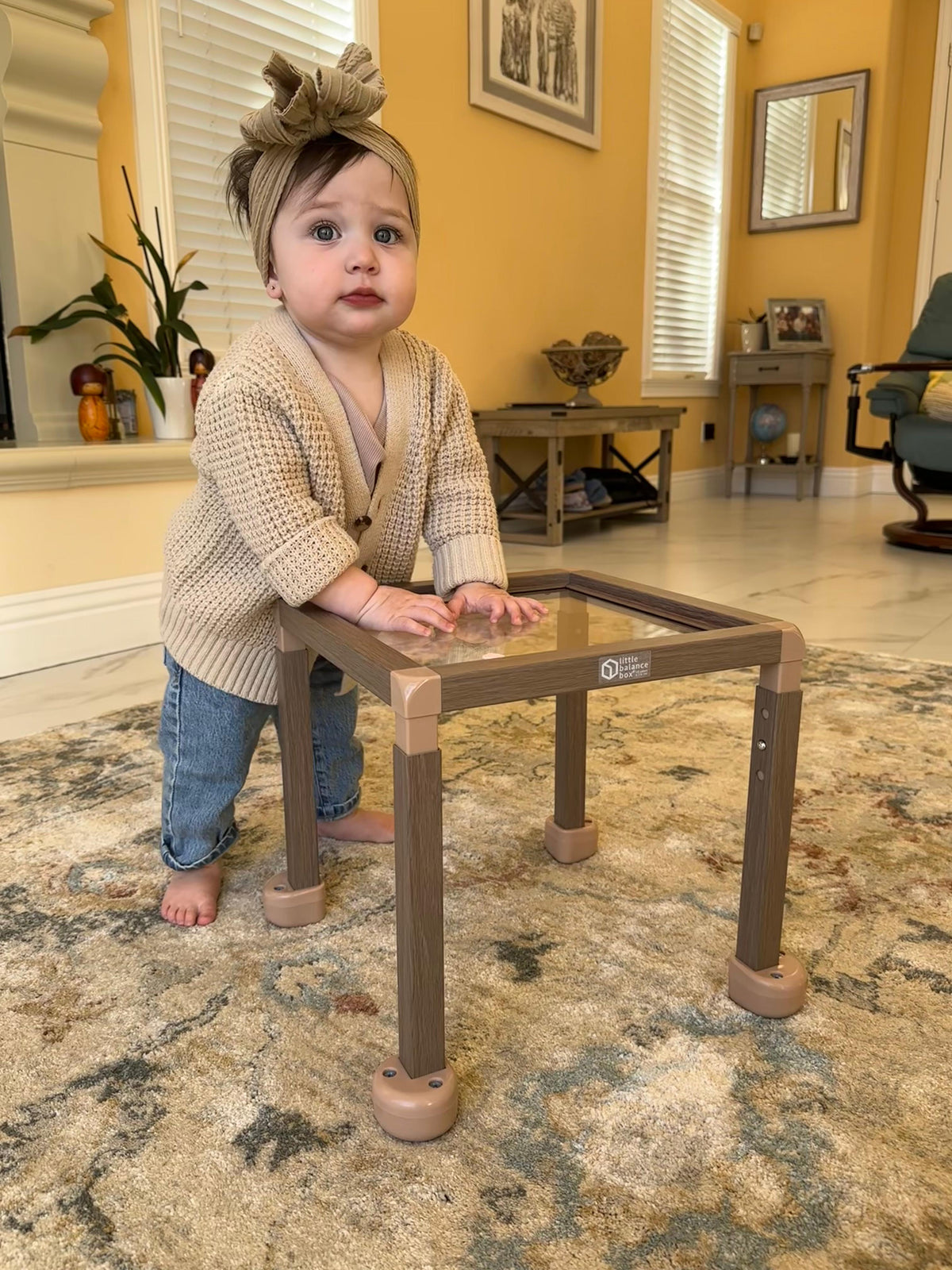
Push tools can provide a supportive surface for babies to explore standing and movement while developing these important skills.

When thoughtfully designed, push tools can help babies:

• Practice supported standing
• Explore weight shifting
• Activate core and postural muscles
• Build confidence in upright movement

The key is that babies remain actively engaged in controlling their movement, rather than being moved by the device itself.

This type of exploration supports natural baby walking development.


Why the Little Balance Box® Grow Was Created

The Little Balance Box® Grow was designed by Dr. Shannon PT, DPT, a mom and physical therapist who invented it while her own daughters were learning to walk.

During that time, a traditional wheeled baby walker rolled out from under her daughter, causing her to face plant.

That moment made her realize there needed to be a safer and more developmentally supportive solution for babies learning to stand and walk.

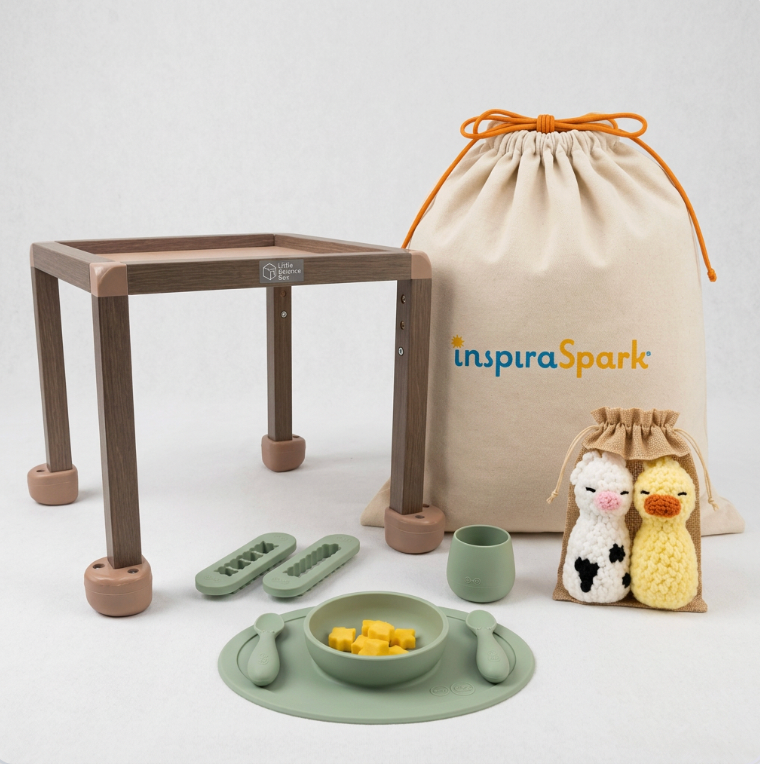
Using both her professional knowledge and her experience as a mom, Dr. Shannon PT,DPT created the Little Balance Box® — a developmental push tool designed to support balance, strength, and natural movement without the risks associated with fast-moving wheels.


How the Little Balance Box® Grow Supports Baby Walking Development

The Little Balance Box® Grow was intentionally designed to support the foundational skills babies build before walking.

Encourages Core Activation

The clear flat top allows babies to push down through their hands, activating the shoulders, core, and pelvic floor. This helps strengthen the muscles needed for upright posture and stability.

Supports Weight Shifting

As babies move around the box, they naturally practice weight shifting, one of the most important steps in how babies learn to walk.

Promotes Kneel-to-Stand Practice

The height and open design allow babies to repeatedly practice the kneel-to-stand baby milestone, strengthening the hips, legs, and core. Key for moving up and down safely.

Provides Sensory Feedback

The spring-loaded feet respond to pressure and movement, providing subtle sensory feedback that helps babies develop body awareness and balance reactions.

Encourages Active Movement

Unlike devices that move babies quickly, the Little Balance Box® allows babies to control their own movement, helping them build coordination and confidence as they explore standing and mobility.


When Families Often Introduce the Little Balance Box®

Many parents are surprised to learn that baby standing development can begin earlier than they expect.

The Little Balance Box® Grow can be introduced once babies have:

Strong head and trunk control
• Around 6 months+ with hands-on assisted standing practice
• Interest in kneel-to-stand movements

Starting earlier allows babies to begin building the strength, coordination, and balance needed before cruising and walking begin.


Preparing the Body for First Steps

Walking doesn’t begin with the first step. It begins months earlier as babies develop balance, strength, and coordination.

By creating opportunities for supported standing, weight shifting, and movement exploration, parents can help support healthy baby walking development.

The Little Balance Box® Grow was designed to support these early stages of development — helping babies build the foundation their bodies need before those first independent steps.

Latest InspiraSpark Updates

查看全部

Baby Walker Alternatives Parents Are Choosing Instead

Baby Walker Alternatives Parents Are Choosing Instead

Why Parents Are Searching for Baby Walker Alternatives For decades, baby walkers were marketed as tools that could help children learn to walk faster. However, many parents today are looking for alternatives that encourage natural movement development. Instead of devices...

阅读更多

Why Physical Therapists Designed the Little Balance Box Grow for Early Walking Development

Why Physical Therapists Designed the Little Balance Box Grow for Early Walking Development

Understanding the Early Walking Stage When children first begin standing and exploring movement, their bodies are still learning how to coordinate balance and stepping. This stage often includes: • Pulling to stand• Cruising along furniture• Attempting early steps Children in...

阅读更多

The Best Walker Alternative for Children Learning to Walk

The Best Walker Alternative for Children Learning to Walk

Why Parents Are Looking for Walker Alternatives For many years, baby walkers were marketed as tools that helped babies learn to walk. However, many therapists now recommend alternatives that support natural balance and coordination development. Instead of placing children in...

阅读更多