
Natural Toys vs. Plastic Toys: How to Choose Non-Toxic, Eco-Friendly Toys for Your Baby
Walk into almost any toy store, and you'll find shelves full of colorful plastic toys. They're lightweight, affordable, and easy to find. But if you're a parent trying to make more thoughtful choices about what comes into your home, you may have started looking at alternatives.
Wooden teethers, bamboo toys, and cotton stuffed animals have become popular with families looking for eco-friendly baby toys. But are natural toys always better? And what should you consider when choosing toys for a child who seems determined to put everything in their mouth?
Here's a closer look at natural toys vs. plastic toys and how to choose options that work for your family.
Natural Toys vs. Plastic Toys: What's the Difference?
Both natural and plastic toys have their place. The difference comes down to the materials, how the toy is made, and how long you can use it.
Plastic toys are often lightweight, easy to clean, and affordable. Many are designed to meet applicable toy safety standards, so choosing plastic doesn't automatically mean you're making an unsafe choice. However, some parents prefer to limit plastic because of concerns about certain chemical additives and the environmental impact of plastic waste.
Natural toys, such as those made from wood, bamboo, cotton, or wool, appeal to parents who prefer simpler materials and want to reduce the amount of plastic in their homes. They can also be durable enough to pass down to younger siblings or save for future use.
Why Do Some Parents Choose to Limit Plastic Toys?
One reason is the uncertainty around certain chemicals used in plastics. Some plastics contain additives that give materials particular properties, such as flexibility. Certain phthalates, for example, have raised health concerns because of their potential effects on hormone function and development. Regulations restrict the use of some of these chemicals in children's products, but researchers continue to study the wider range of chemicals that may be present in plastic items.
This doesn't mean every plastic toy contains harmful chemicals or that every exposure poses a risk. It does help explain why some families prefer to be selective about the plastic products they buy, particularly for babies who frequently mouth their toys.
The environmental side matters, too. Many conventional plastics are made from fossil fuels, and small or mixed-material toys can be difficult to recycle. Broken toys and products that are quickly outgrown may end up in landfills rather than being reused.
Choosing fewer, longer-lasting products can be one way to reduce waste. For some families, that means choosing natural materials when practical; for others, it means keeping and reusing the toys they already have.
The goal isn't to fear plastic or replace everything you own. It's to understand your options and make choices that feel right for your family.
Are Wooden and Bamboo Toys a Better Choice?
Wooden and bamboo toys are popular with parents looking for natural, eco-friendly alternatives to plastic. They're loved for their simple designs, natural textures, and durability, making them great options to enjoy and pass down as your little one grows.
When choosing any toy, look for quality materials, smooth surfaces, and a design suited to your baby's age. Choosing durable toys that can be reused or passed along is also a simple way to reduce waste.
Ultimately, the best toys are ones that are thoughtfully made, safe for your little one, and built to last.
How Do I Choose Non-Toxic, Eco-Friendly Toys?
You don't need to overhaul your toy collection to make more thoughtful choices. A few simple habits can help:
-
Check the materials and finishes. Look for clear information from the manufacturer about what the toy is made of, including its paints and coatings.
-
Look beyond labels. Terms such as BPA-free and PVC-free can be useful, but they don't tell you everything about a product's overall safety.
-
Choose age-appropriate toys. Check for small detachable parts, sharp edges, splinters, and other hazards, especially for babies who mouth their toys.
-
Think about durability. Toys that can be used for longer, repaired when appropriate, or passed down may offer more value and create less waste.
-
Reuse what you already have. Keeping well-maintained toys in circulation can be a more sustainable choice than replacing everything with new products.
-
Follow the instructions. Check the manufacturer's age recommendations and use guidance, and supervise your child during play.
The best choice isn't always the newest or most expensive product. It's one that suits your child's stage, is appropriate for its intended use, and will be useful to your family.
Do Babies Need Special Toys for Development?
It's easy to feel like every stage of your baby's development requires another product. One toy promises to encourage reaching, another focuses on standing, and another is designed for those first steps.
But babies can explore and practice new movements through everyday play, too. Floor time, reaching for a favorite toy, moving around their space, and interacting with their surroundings all offer opportunities to explore.
If you're considering a developmental toy, think about what it actually offers and whether it fits your baby's current stage.
Where the Little Balance Box Fits In
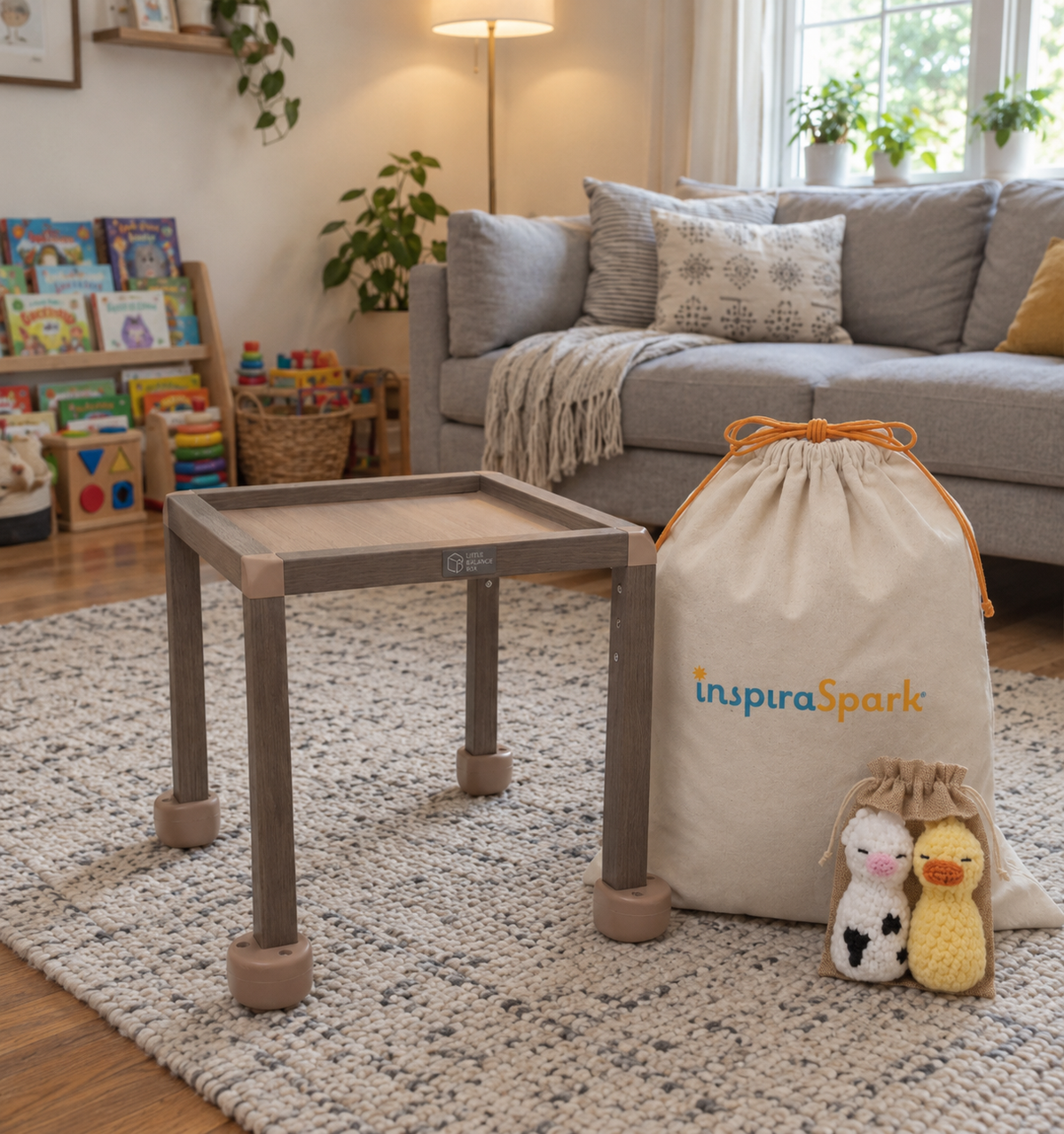
The Little Balance Box was created by Dr. Shannon, PT, DPT, a physical therapist and mom. When her daughters were learning to stand and walk, she watched a traditional push walker roll out from under her daughter. She realized there was an opportunity to create something different: a stable surface that supports babies as they practice foundational movements at their own pace.
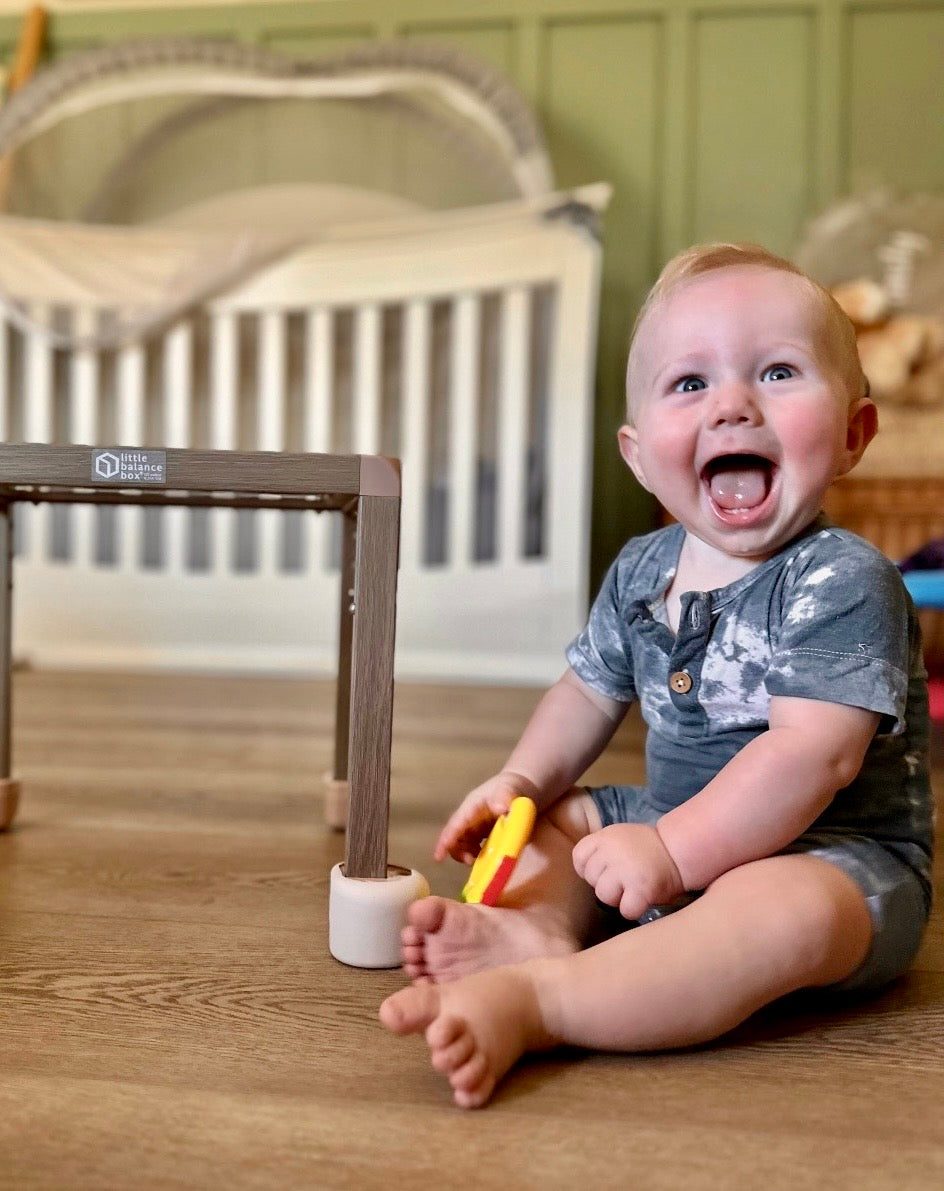
Drawing on her experience as both a mom and a physical therapist, Dr. Shannon thoughtfully designed the LBB with safety, quality, and development in mind. Its low, flat surface gives babies a place to pull up on, lean against, and push through their hands or forearms as they explore standing. The design also features rounded corners, 360° access, adjustable height, and silicone sensory booties that provide traction and tactile feedback.
As little ones grow, the LBB can convert into a toddler table, making it a lasting investment that can be used for years and passed down to younger siblings. From practicing the movements that lead to walking to enjoying activities like drawing, playing, and eventually learning to write, the LBB can continue to be part of your little ones’ growth and development.
Thoughtful materials and safety are part of the design, too. The LBB features a durable, recyclable aluminum frame and a transparent, shatter-resistant polycarbonate top. Its materials are non-toxic and BPA- and PVC-free, and the product undergoes third-party safety testing to help ensure it meets applicable safety standards.
The LBB isn't a requirement for learning to walk. It's a thoughtfully designed developmental tool that offers little ones another opportunity to practice foundational skills with adult supervision, alongside everyday movement and play.
The Bottom Line
You don't need to throw out every plastic toy, buy everything made from wood, or fill your home with products for every milestone.
Instead, look at what toys are made of, how they're constructed, and whether they'll last beyond a few weeks of use. Choosing durable products, reusing what you already own, and passing toys down to other families are all practical ways to be more mindful of waste.
And when it comes to your baby's development, remember that you don't need a product for every milestone. Everyday play and opportunities to explore matter, too.
分享:
Celebrating Small Wins: Milestones Before the First Step
PT-Approved Gifts for Babies Under 1 Year Old: Thoughtful Gifts That Support Development