
Open-Ended Toys vs. Battery-Operated: What the Research Says
Walk down any toy aisle and the difference is obvious. On one side: toys that light up, sing, count, and react the moment your child touches them. On the other: blocks, balls, boxes, and simple wooden pieces that do... nothing, until your child decides what they'll do.
It's a fair question to ask — does it actually matter which kind of toy your child plays with? Or is it just a preference some parents have?
It turns out there's real research behind this, and it points in a pretty consistent direction.
What "Open-Ended" Actually Means
An open-ended toy is any toy without a single fixed use. Blocks, balance tools, play silks, simple push toys, art supplies, and natural materials all fall into this category. A child can use the same toy differently every time they pick it up — stacking it, sorting it, balancing on it, turning it into something else entirely.
A battery-operated or "closed-ended" toy, by contrast, usually has one function. Press a button, and it does the same thing every time. The toy leads. The child responds.
Neither category is "bad" — but they ask very different things of a developing brain.
What the Research Shows
A widely cited study out of Northern Arizona University, published in JAMA Pediatrics, recorded parents and infants playing with electronic toys, traditional toys like blocks and puzzles, and books. Electronic toy play was linked to noticeably fewer adult words, fewer conversational turns, and fewer content-specific words — with traditional toys producing communication almost as rich as book reading. Other studies have found similar results, including lower parent responsiveness during electronic toy play and reduced language output in both neurotypical children and children with autism spectrum disorder.
Across this research, a consistent pattern emerges:
- Open-ended toys prompt more back-and-forth conversation
- Simple toys are linked to more pretend play and problem-solving
- Lights, sounds, and pre-programmed responses tend to shorten and simplify play
- Children often lose interest in single-function toys faster than flexible ones
The takeaway isn't that battery-operated toys are harmful — it's that they tend to occupy a child rather than engage them.
Why This Happens
Battery-operated toys are designed to hold attention for the child. The toy does the entertaining: it lights up, it plays a sound, it announces a color. The child's job is mostly to react.
Open-ended toys work the opposite way. The toy does nothing until the child brings an idea to it. A block can be a tower, a phone, a snack, or a piece of a bridge — the play is generated by the child's own thinking, not by the toy's programming.
This is where a lot of the developmental value comes from: problem-solving, imagination, language, and even social skills (like sharing an idea about what the block "is" with a sibling or parent) all get more exercise during open-ended play.
It's Not About Getting Rid of Every Battery-Operated Toy
This isn't a case for throwing out every toy with a switch. A few things are worth keeping in mind:
- Balance matters more than elimination. A shelf mostly stocked with open-ended toys, with the occasional electronic toy mixed in, is a very reasonable approach.
- How a toy is used matters as much as what it is. A musical toy used during active parent-child interaction (singing along, dancing, taking turns) still supports connection and language.
- Simpler is often more durable — literally. Open-ended toys tend to hold a child's interest across a wider age range, since the play grows in complexity as the child does.
What to Look for When Choosing Toys
If you're evaluating what to add to your child's play space, a few questions can help:
- Does this toy have more than one way to be used?
- Will my child still be interested in this in six months, or will it be a one-time novelty?
- Does this toy invite me to play with my child, or does it play for them?
- Is the toy's function obvious immediately, or does it take some exploration?
Toys that pass most of these questions tend to be the ones that get pulled off the shelf again and again — not because they do more, but because they let your child do more.
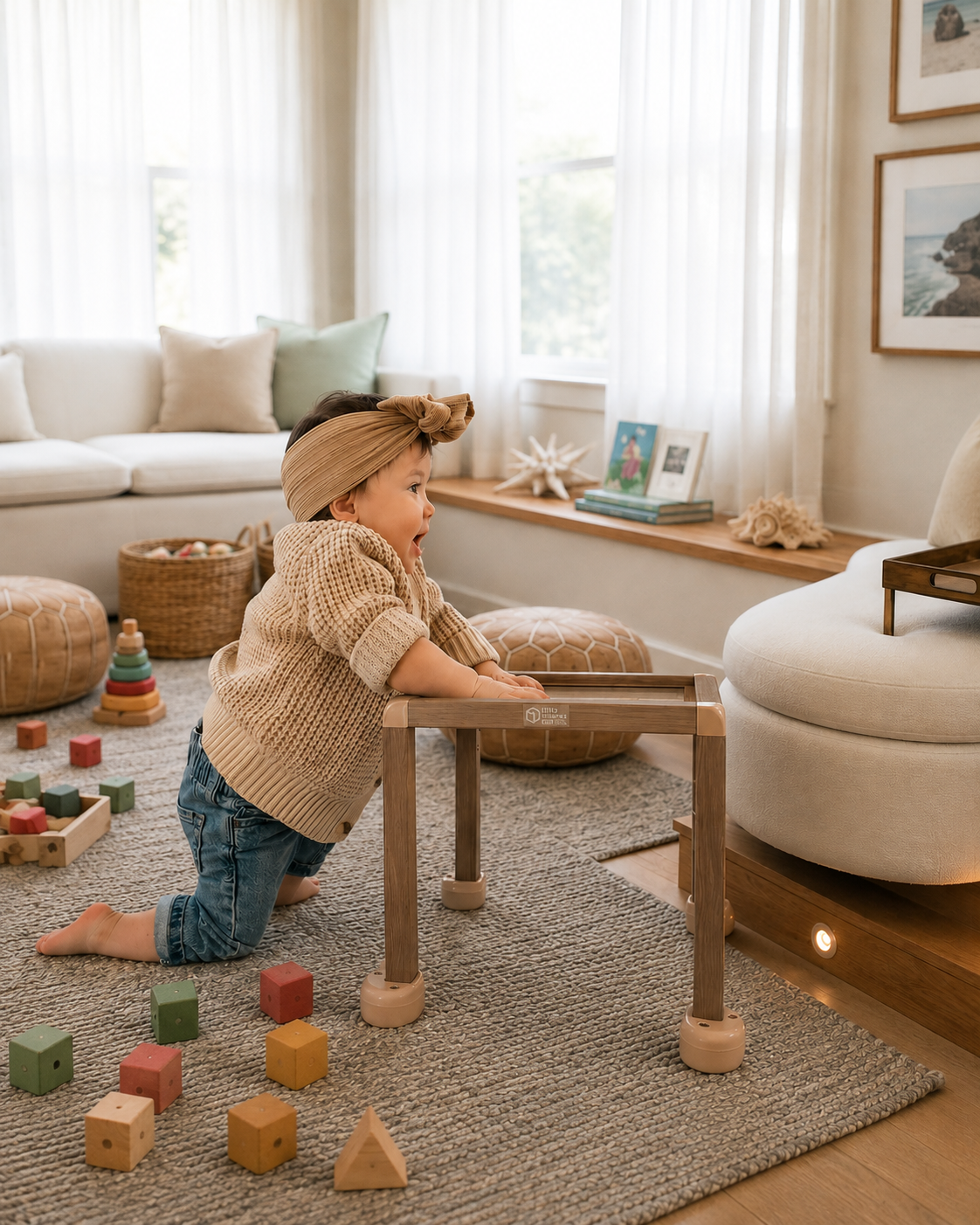
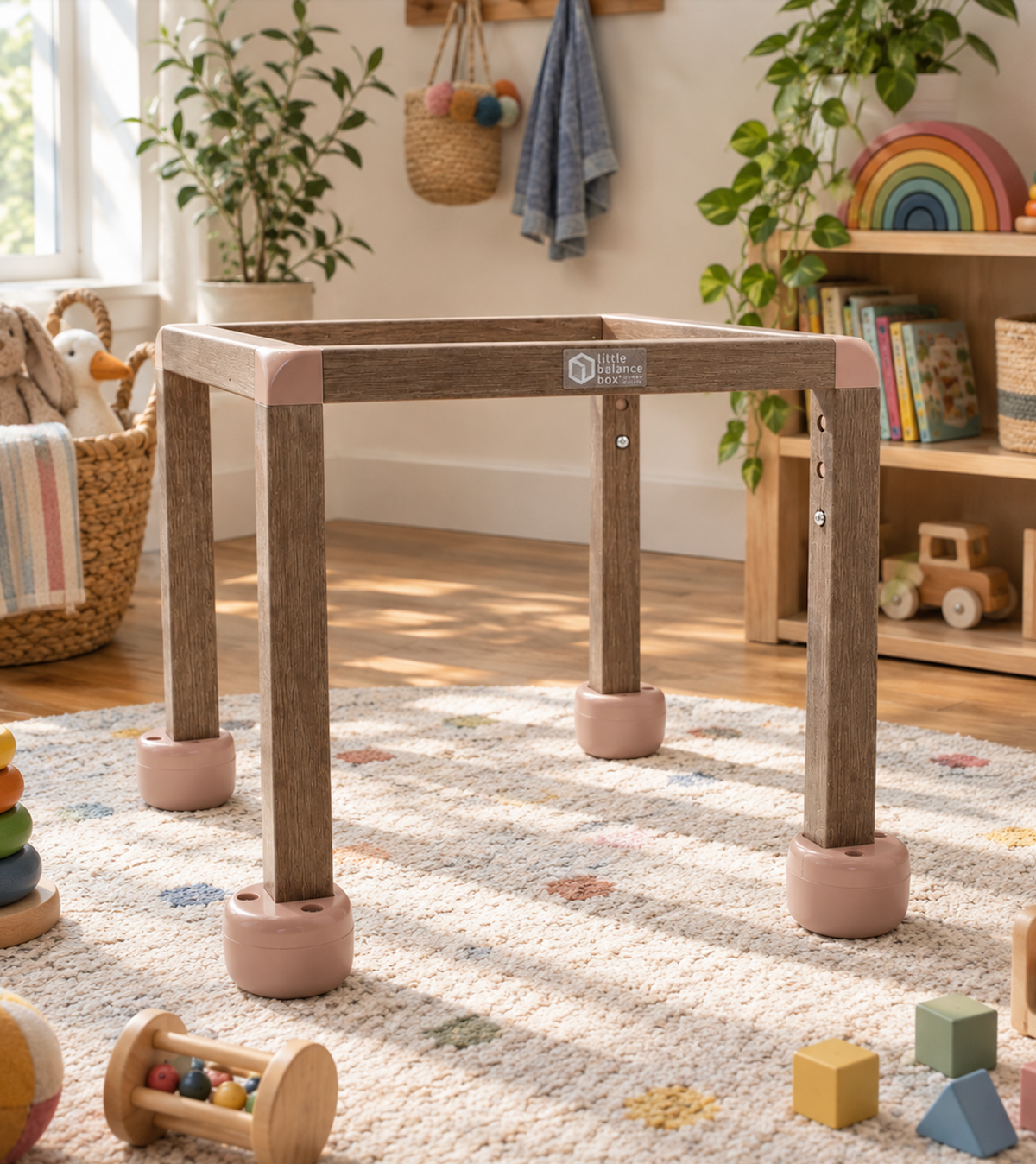
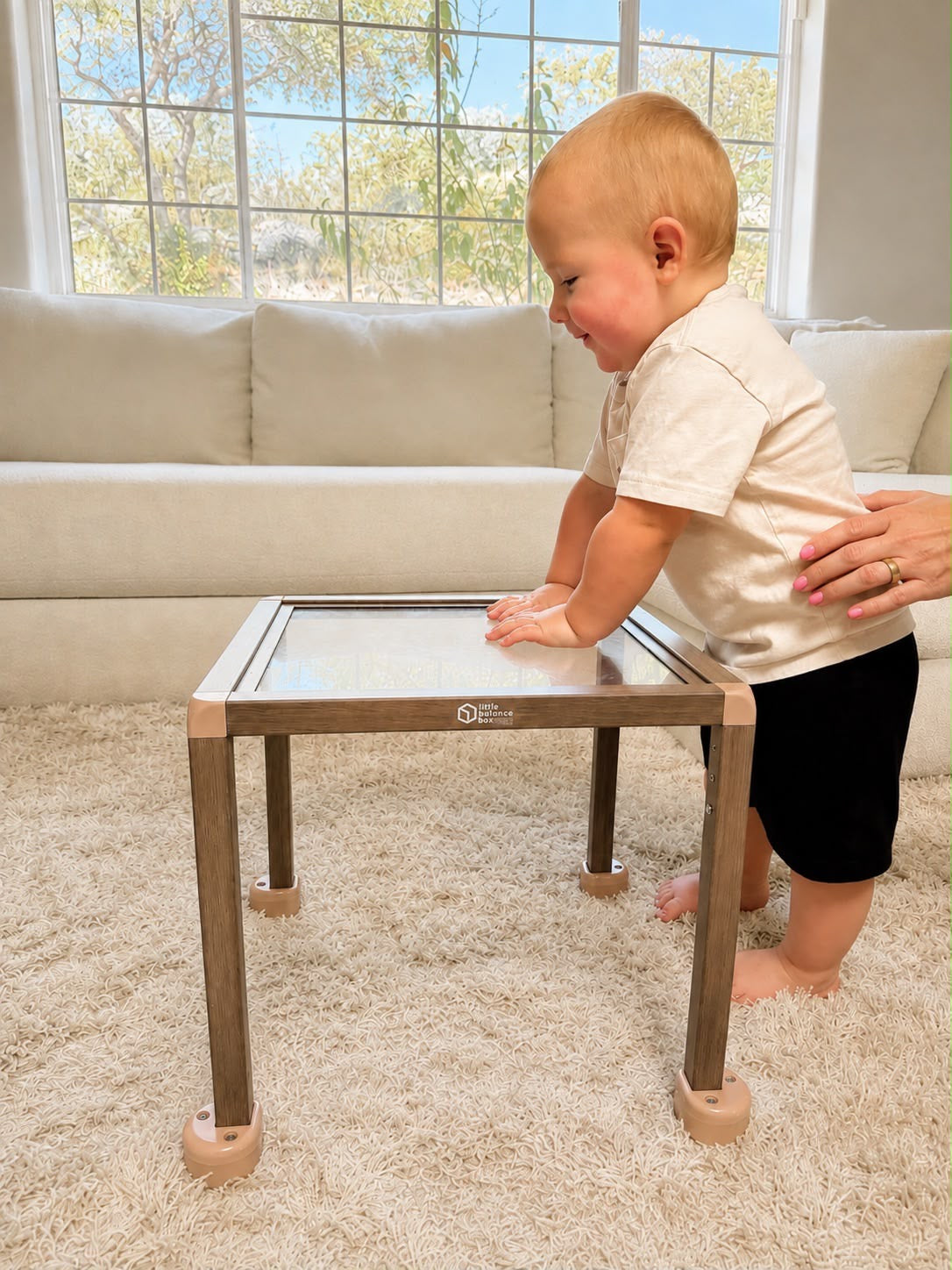
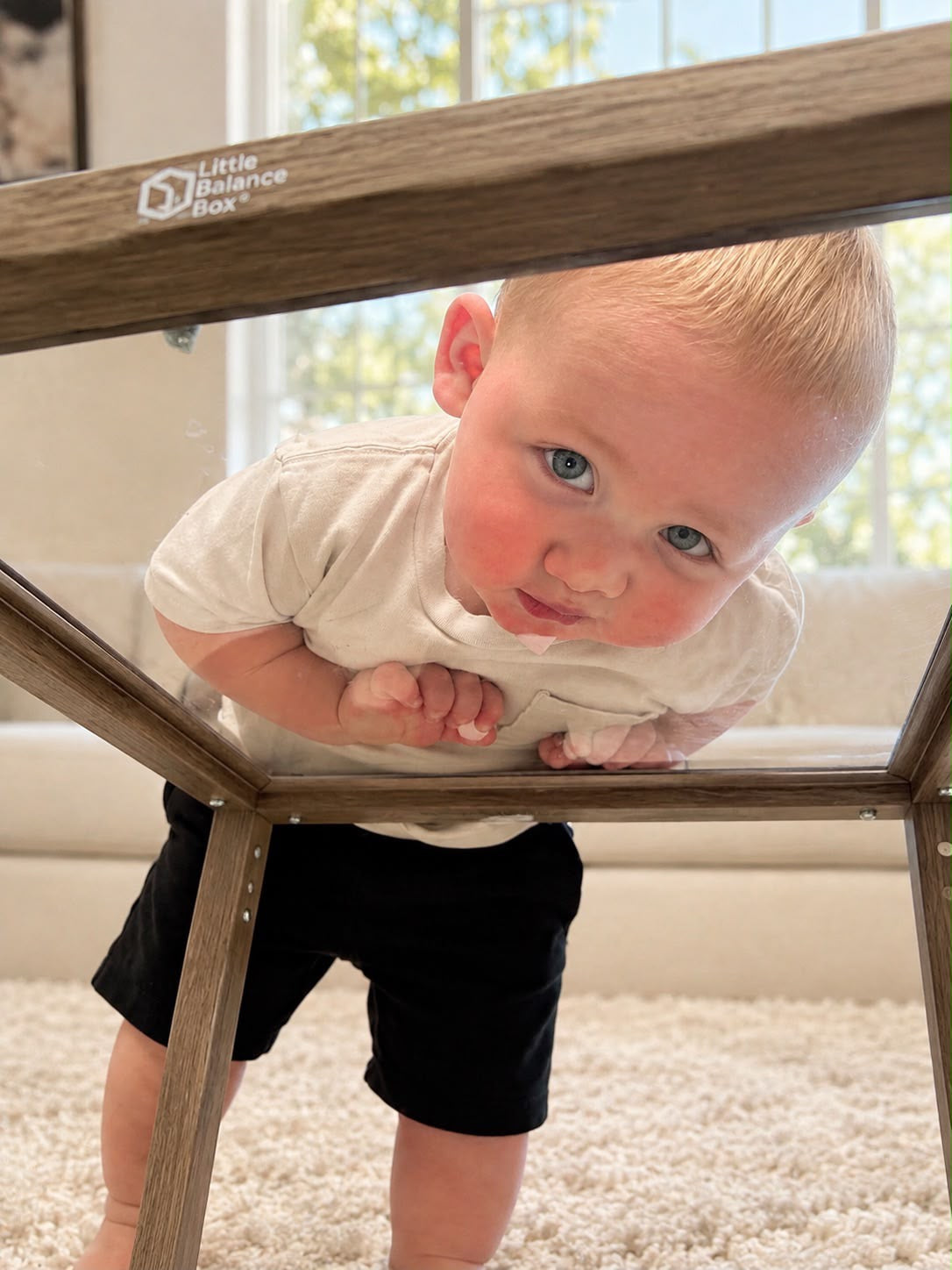
The Little Balance Box Grow was designed with this exact philosophy in mind. Rather than lights, sounds, or pre-set functions, it relies on simple, open-ended features that invite a child to lead the play — building balance, coordination, and confidence through their own movement and problem-solving instead of a button press. No screens, no pre-programmed responses, nothing doing the thinking for them. Just a tool that grows alongside your child, engaging their mind and body the way research suggests matters most.
Share:
From First Steps to Toddler Table
New Routines, New Steps: Keeping Your Baby's Walking Practice Going During a Busy Back-to-School Season