

Carrying vs. Floor Time: Finding the Right Balance for Your Baby
Think about your child's day for a moment. Car seat. Stroller. Carrier. High chair. Bouncer or swing. Diaper changes. Sleep.
Babies spend much of their day being held or contained, and that's a normal, necessary part of caring for them. Car seats keep babies safe, carriers keep them close, and strollers help us get around. But it's also worth asking: when does your baby get time to move freely, explore, and practice new skills?
Support Is About Opportunity
Here's something we want to be upfront about: most children learn to walk on their own.
The same is true of talking. Most children learn to talk on their own, too. But that doesn't stop us from singing to our babies, reading to them, and talking with them every single day. We don't do it because they won't talk without us. We do it because we want them to learn and practice.
Walking is no different. Letting your child practice moving isn't about rushing or fixing anything. It's about supporting them and giving them the opportunity to practice.
Learning Takes a Lot of Repetition
Developing motor skills takes practice, and new movements often require many repetitions before they become familiar.
Now think about where that practice happens. Not while your child is in a car seat, sitting in a high chair, or sleeping. It happens during free movement time, when your baby has the opportunity to reach, rotate, bend, shift their weight, and explore different movements on their own.
Of course, children still need to be held, fed, transported, and rested. The goal isn't to eliminate those moments of containment, but to make room for movement throughout the day. Always supervise your baby during floor time and provide a safe space to explore.
Rather than focusing only on whether your child is meeting a checklist of milestones, consider looking at their day as a whole. Are there opportunities for them to move, experiment, and practice new skills? Small moments throughout the day can add up.
From Checklists to Agency
Milestone charts can be helpful, but they can also leave parents feeling like all they can do is wait and see. Understanding how babies learn new skills can help parents feel more involved in the process.
Every child develops at their own pace, and there isn't one exact timeline that applies to every child. The goal isn't to rush your child toward a milestone or hit a specific date. It's to provide opportunities for movement, exploration, and practice as they grow.
You can't control every part of your baby's development, but you can help create an environment where they have room to learn.
Finding Time for Practice
A few small shifts in your day can make it easier to fit movement into your baby's routine:
-
Find a consistent time. Choose a time in your daily routine when you can regularly set aside a few minutes to focus on floor time with your child, ideally when they're rested, fed, and ready to play
-
Join them and encourage exploration. Play alongside your child, talk to them, and encourage them to explore. Your presence can make floor time more engaging.
-
Set up a safe space. A clear, baby-proofed area gives your child room to explore while allowing you to supervise comfortably.
-
Give them a reason to move. A favorite toy or your smiling face just a little farther away can encourage your child to reach, turn, or move toward something interesting.
Where the Little Balance Box Fits In
As we mentioned, you don't need a Little Balance Box for your child to learn to walk. It's simply a tool designed to support your child's walking journey and give them opportunities to practice.
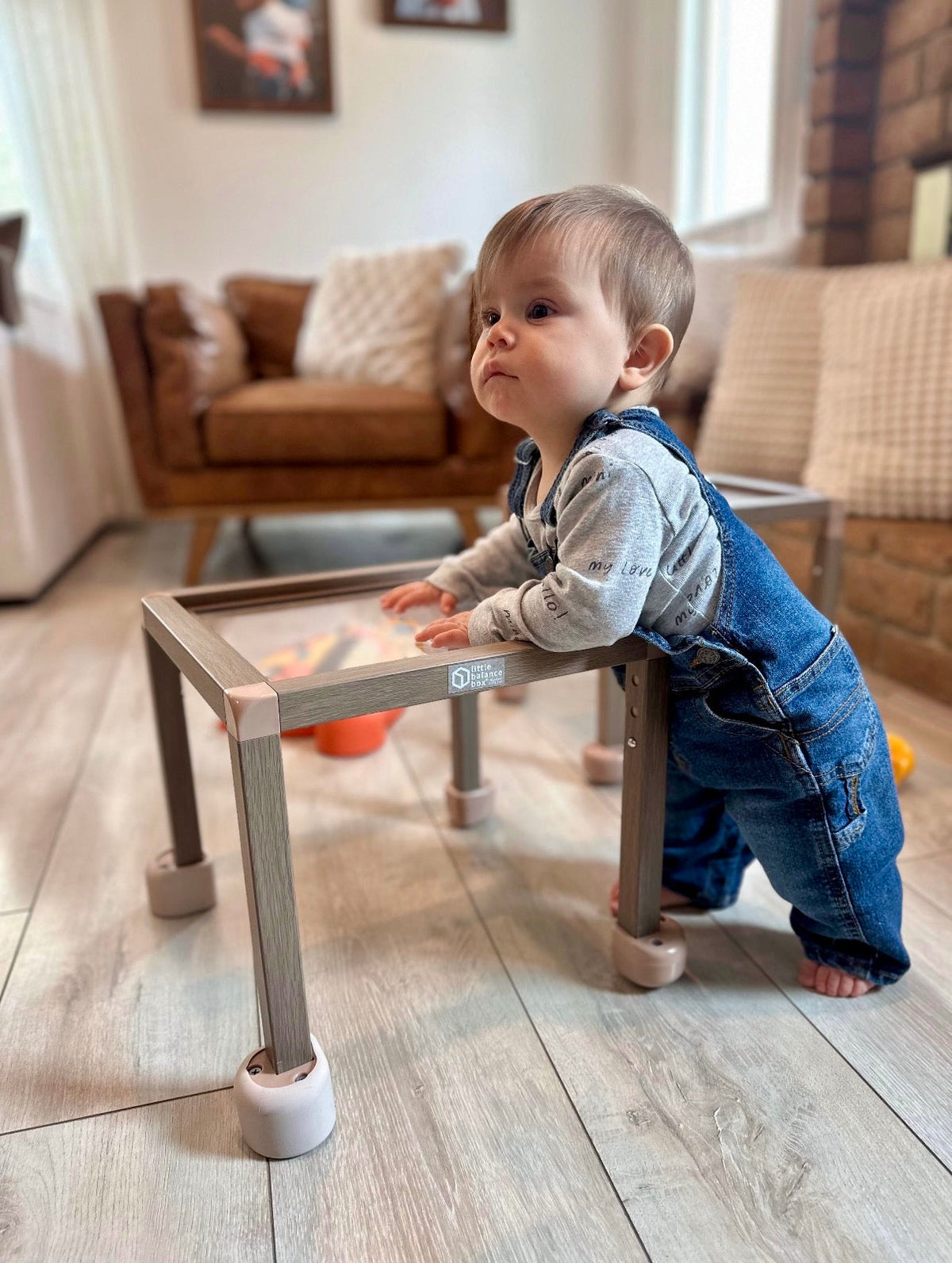
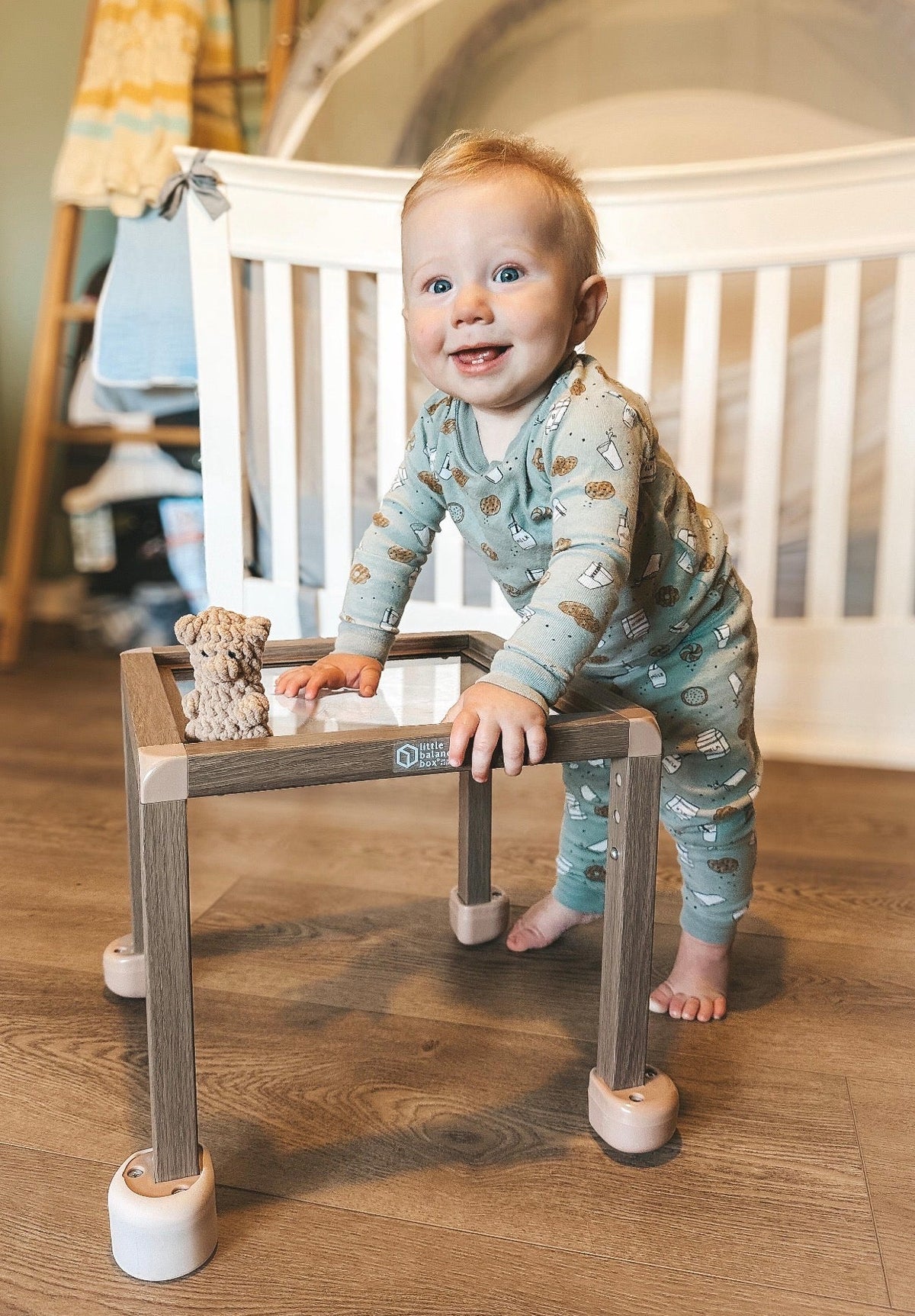
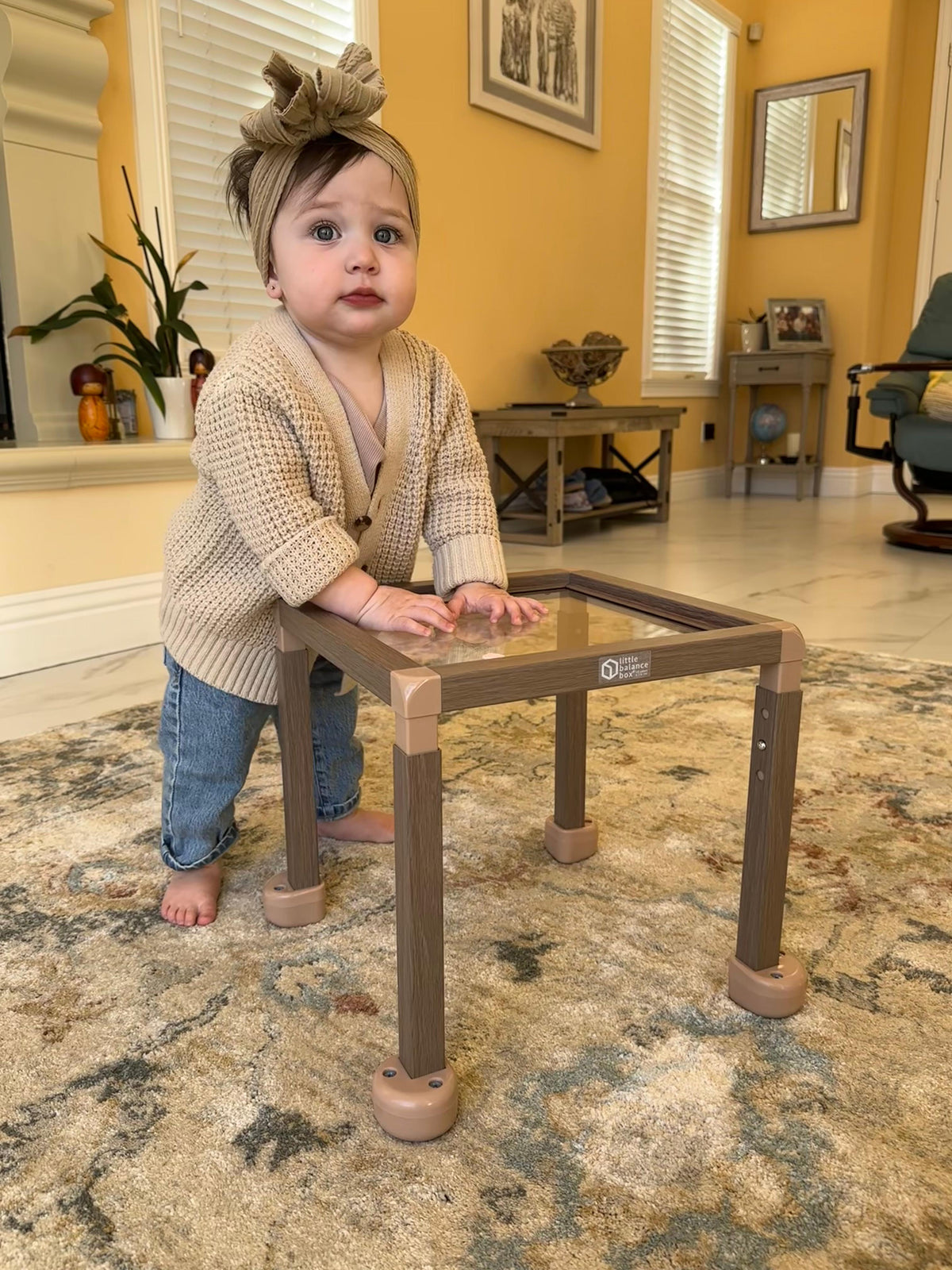
When babies begin pulling up and showing an interest in standing, having a stable surface to hold onto can help them explore these movements. The Little Balance Box offers a surface babies can pull up on, push, and engage with as they practice. Placing a favorite toy on top can provide extra motivation to reach, stand, and explore.
Finding the Balance
Babies spend a lot of their day contained, and that's okay. The question is where the practice time fits. Just like we sing, read, and talk to our babies every day, we can offer them time to move, too. Support is about opportunity, and a little more of it can go a long way.
分享:
The Role of Motivation in Learning to Walk