

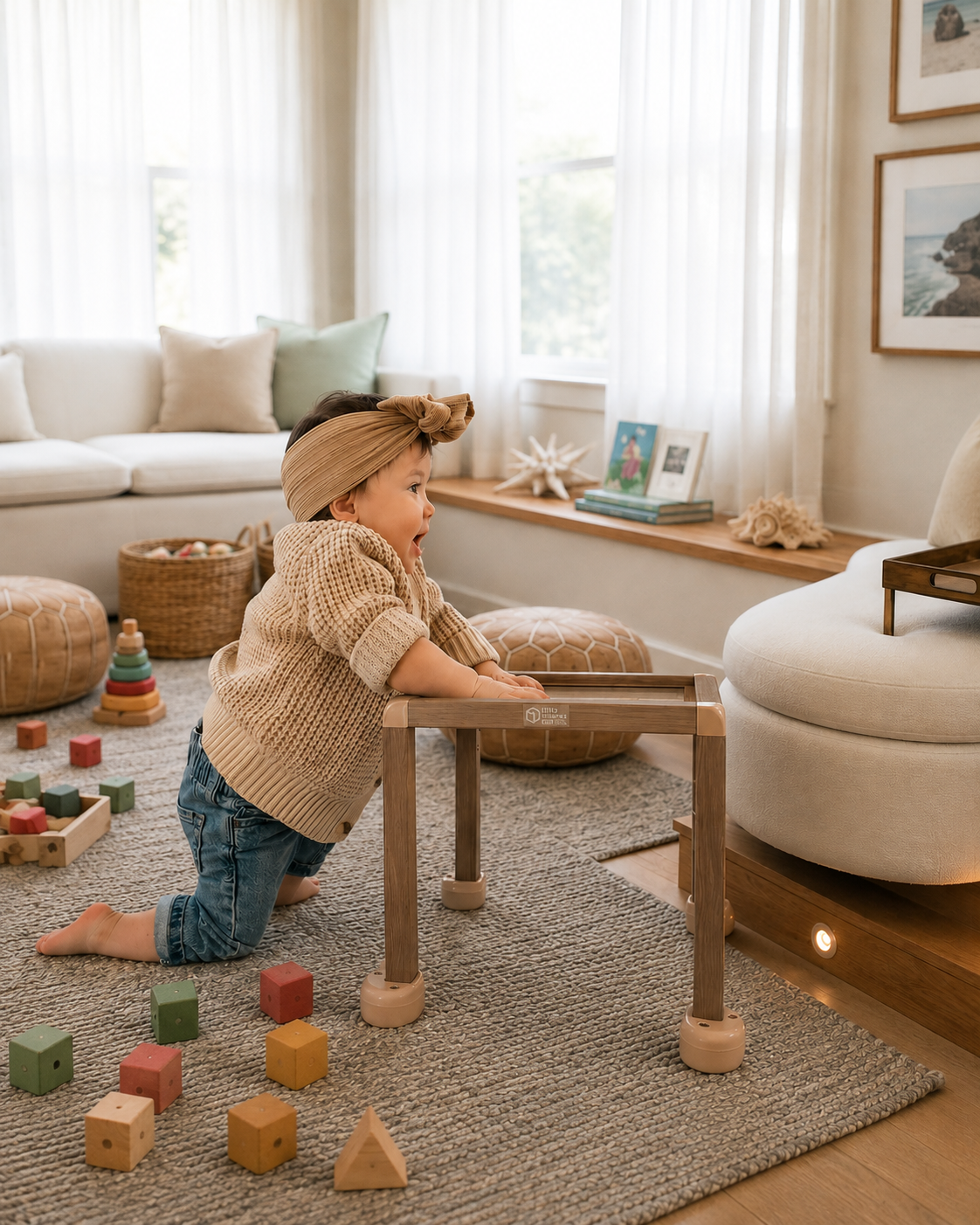
Juguetes de final abierto vs. juguetes a pilas: lo que dice la investigación
Al recorrer cualquier pasillo de juguetes, la diferencia es obvia. Por un lado: juguetes que se iluminan, cantan, cuentan y reaccionan en cuanto tu hijo los toca. Por el otro: bloques, pelotas, cajas y piezas de madera simples que no hacen... nada, hasta que tu hijo decide qué harán.
Es una pregunta justa: ¿realmente importa qué tipo de juguete usa tu hijo? ¿O es solo una preferencia de algunos padres?
Resulta que hay una investigación real detrás de esto, y apunta en una dirección bastante consistente.
Qué significa realmente "final abierto"
Un juguete de final abierto es cualquier juguete sin un único uso fijo. Los bloques, las herramientas de equilibrio, las telas de juego, los juguetes de empuje simples, los materiales de arte y los materiales naturales entran en esta categoría. Un niño puede usar el mismo juguete de manera diferente cada vez que lo toma: apilándolo, clasificándolo, equilibrándose sobre él, convirtiéndolo en algo completamente diferente.
Un juguete a pilas o de "final cerrado", por el contrario, suele tener una función. Pulsa un botón y hace lo mismo cada vez. El juguete dirige. El niño responde.
Ninguna categoría es "mala", pero exigen cosas muy diferentes de un cerebro en desarrollo.
Lo que muestra la investigación
Un estudio ampliamente citado de la Universidad del Norte de Arizona, publicado en JAMA Pediatrics, grabó a padres y bebés jugando con juguetes electrónicos, juguetes tradicionales como bloques y rompecabezas, y libros. El juego con juguetes electrónicos se relacionó con notablemente menos palabras de adultos, menos turnos conversacionales y menos palabras específicas de contenido, mientras que los juguetes tradicionales producían una comunicación casi tan rica como la lectura de libros. Otros estudios han encontrado resultados similares, incluida una menor capacidad de respuesta de los padres durante el juego con juguetes electrónicos y una reducción en la producción de lenguaje tanto en niños neurotípicos como en niños con trastorno del espectro autista.
A través de esta investigación, surge un patrón consistente:
- Los juguetes de final abierto provocan más conversaciones de ida y vuelta
- Los juguetes simples se relacionan con más juego de simulación y resolución de problemas
- Las luces, los sonidos y las respuestas preprogramadas tienden a acortar y simplificar el juego
- Los niños suelen perder el interés en los juguetes de una sola función más rápido que en los flexibles
La conclusión no es que los juguetes a pilas sean dañinos, sino que tienden a ocupar a un niño en lugar de involucrarlo.
Por qué sucede esto
Los juguetes a pilas están diseñados para mantener la atención del niño. El juguete es el que entretiene: se ilumina, emite un sonido, anuncia un color. El trabajo del niño es principalmente reaccionar.
Los juguetes de final abierto funcionan de forma opuesta. El juguete no hace nada hasta que el niño le aporta una idea. Un bloque puede ser una torre, un teléfono, un refrigerio o una parte de un puente; el juego es generado por el propio pensamiento del niño, no por la programación del juguete.
Aquí es de donde proviene gran parte del valor del desarrollo: la resolución de problemas, la imaginación, el lenguaje e incluso las habilidades sociales (como compartir una idea sobre lo que "es" el bloque con un hermano o padre) se ejercitan más durante el juego de final abierto.
No se trata de deshacerse de todos los juguetes a pilas
Este no es un argumento para tirar todos los juguetes con interruptor. Algunas cosas a tener en cuenta:
- El equilibrio importa más que la eliminación. Una estantería mayormente llena de juguetes de final abierto, con algún juguete electrónico ocasional mezclado, es un enfoque muy razonable.
- La forma en que se usa un juguete importa tanto como lo que es. Un juguete musical utilizado durante la interacción activa entre padres e hijos (cantando, bailando, turnándose) sigue fomentando la conexión y el lenguaje.
- Lo más simple suele ser más duradero, literalmente. Los juguetes de final abierto tienden a mantener el interés de un niño en un rango de edad más amplio, ya que el juego crece en complejidad a medida que el niño lo hace.
Qué buscar al elegir juguetes
Si estás evaluando qué añadir al espacio de juego de tu hijo, algunas preguntas pueden ayudarte:
- ¿Este juguete tiene más de una forma de usarse?
- ¿Mi hijo seguirá interesado en esto dentro de seis meses, o será una novedad de una sola vez?
- ¿Este juguete me invita a jugar con mi hijo, o juega por ellos?
- ¿La función del juguete es obvia de inmediato, o requiere cierta exploración?
Los juguetes que pasan la mayoría de estas preguntas tienden a ser los que se sacan del estante una y otra vez, no porque hagan más, sino porque permiten que tu hijo haga más.
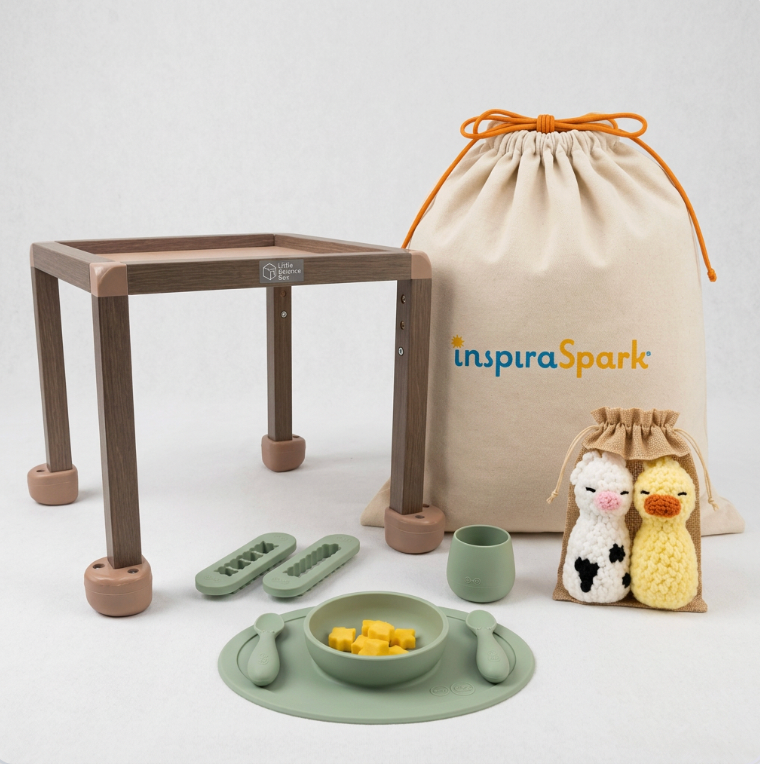
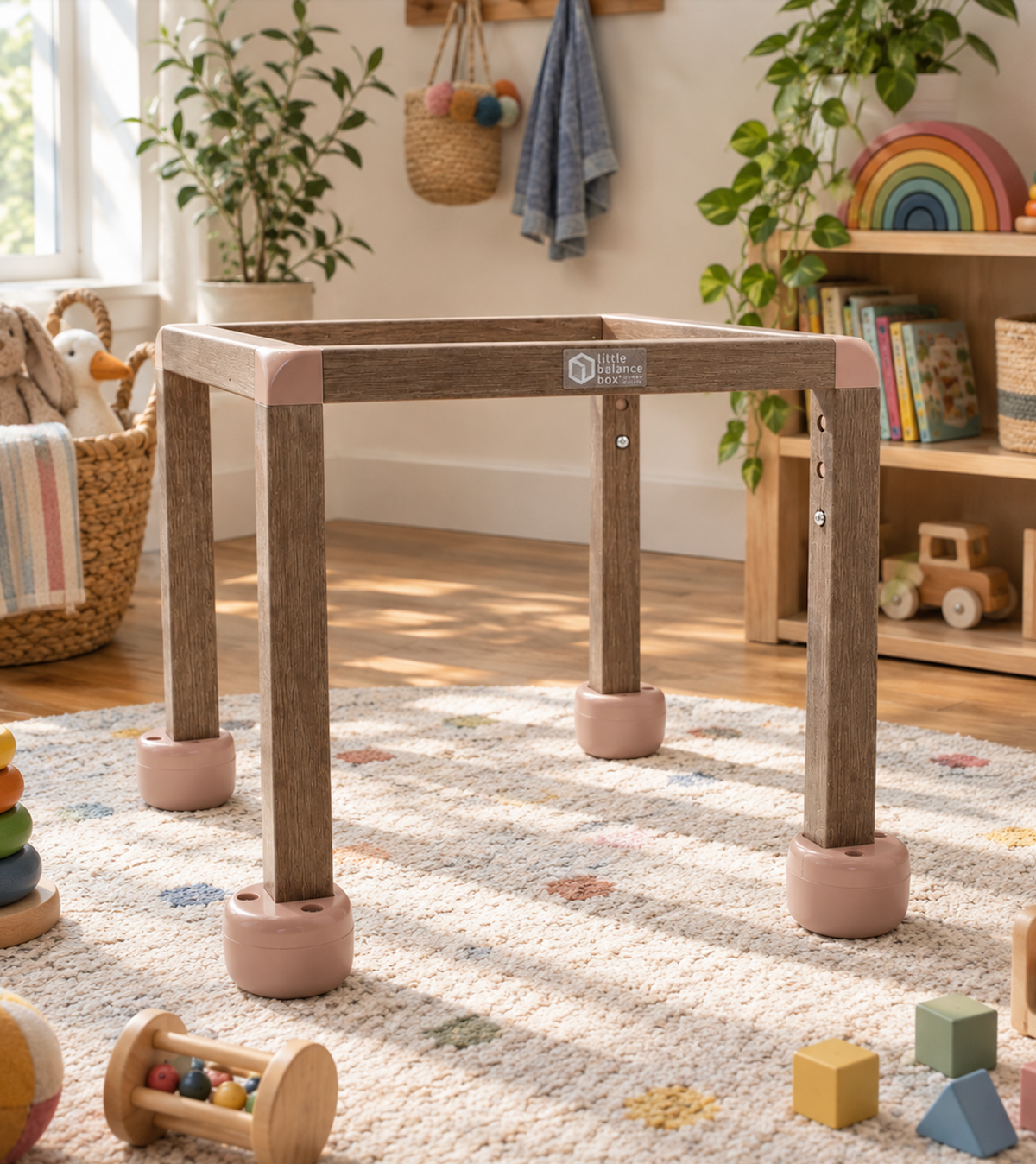
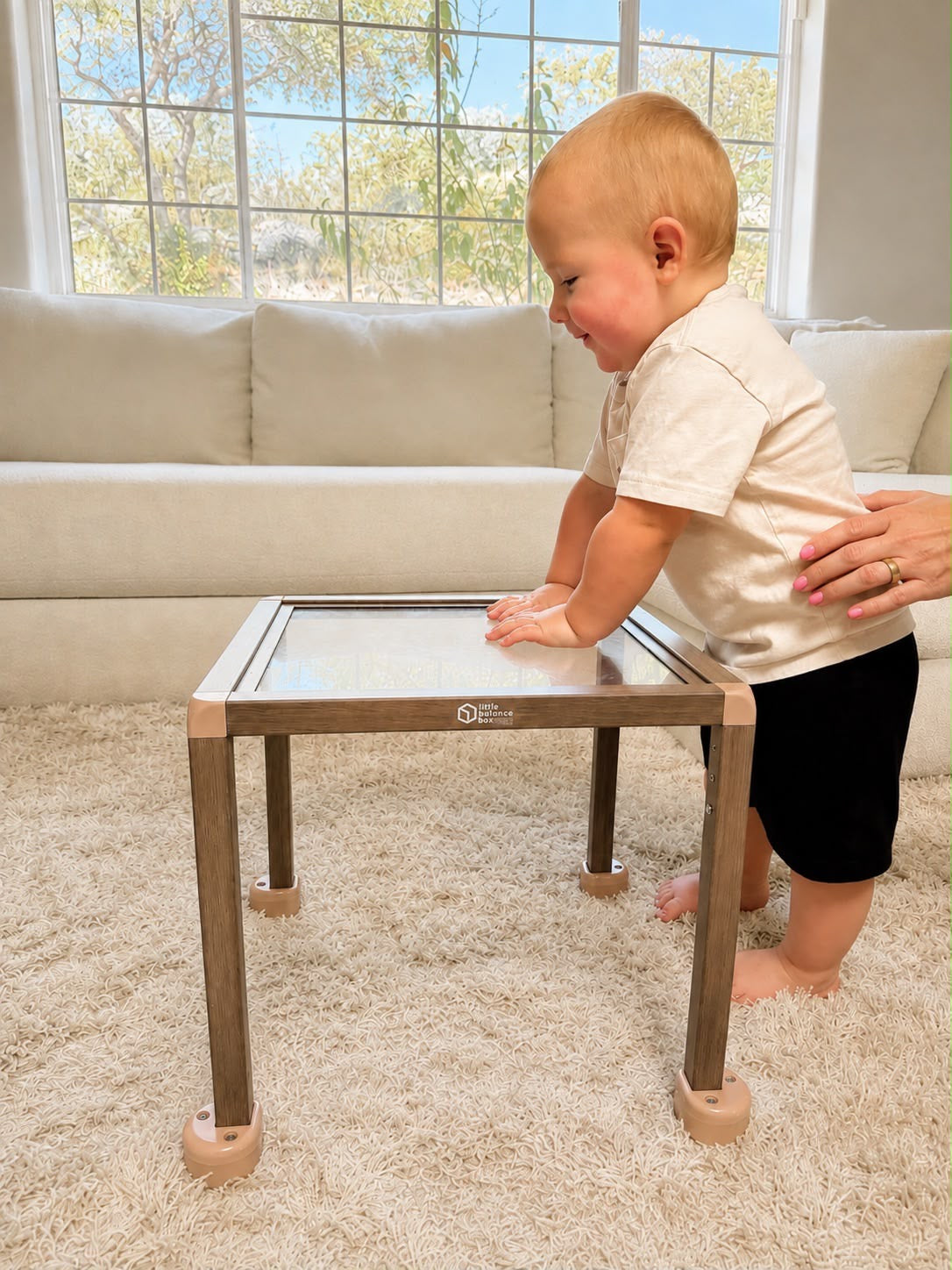
The Little Balance Box Grow fue diseñado con esta filosofía exacta en mente. En lugar de luces, sonidos o funciones preestablecidas, se basa en características simples y abiertas que invitan al niño a dirigir el juego, desarrollando el equilibrio, la coordinación y la confianza a través de su propio movimiento y resolución de problemas en lugar de pulsar un botón. Sin pantallas, sin respuestas preprogramadas, nada que piense por ellos. Simplemente una herramienta que crece junto a tu hijo, involucrando su mente y cuerpo de la manera que la investigación sugiere que más importa.
Compartir:
De los primeros pasos a la mesa del niño pequeño
Nuevas rutinas, nuevos pasos: cómo mantener la práctica de caminar de tu bebé durante una ajetreada temporada de regreso a clases