

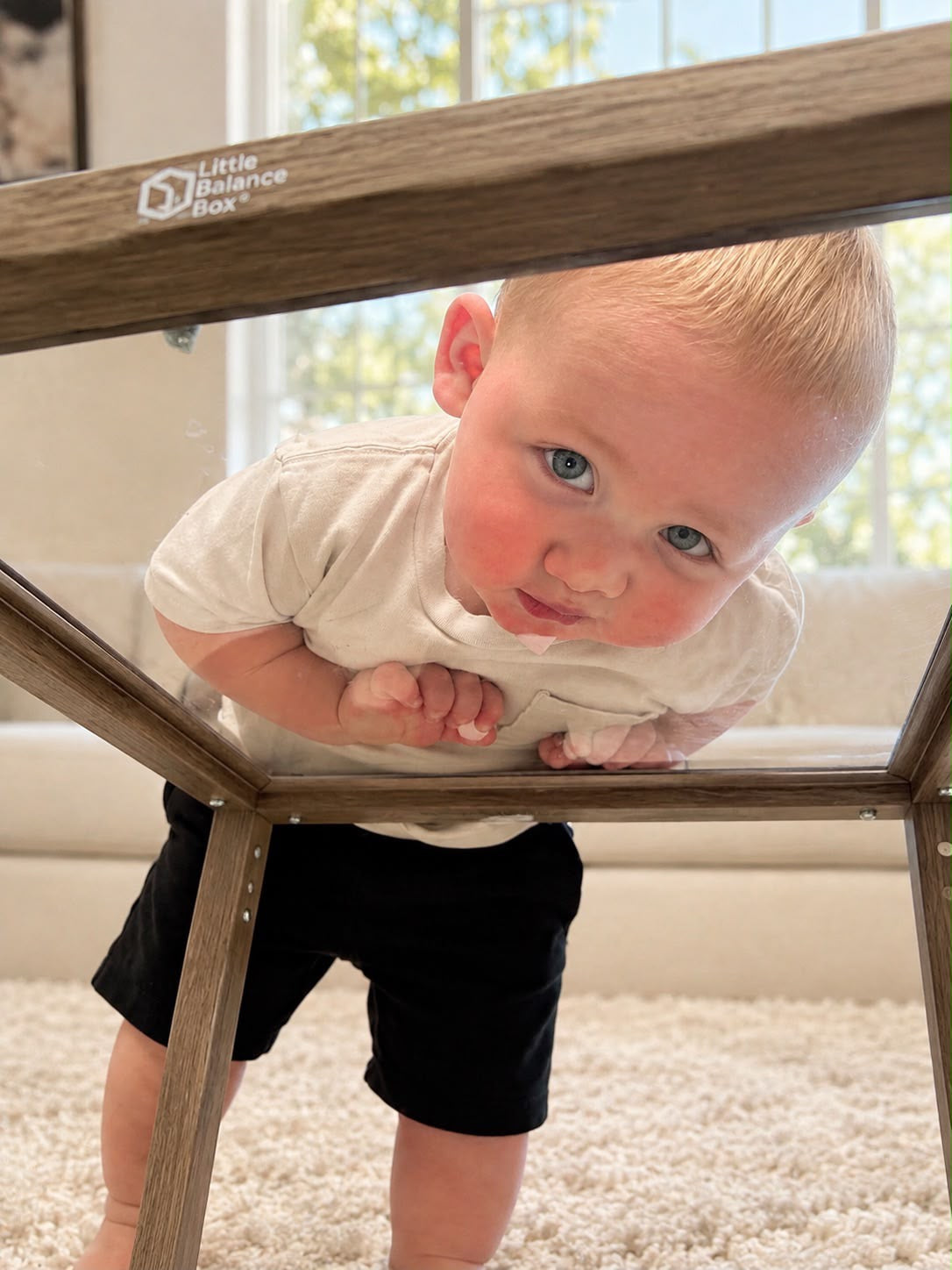
Nuevas rutinas, nuevos pasos: cómo mantener la práctica de caminar de tu bebé durante una ajetreada temporada de regreso a clases
No necesitas una rutina perfecta para que tu hijo aprenda a caminar, solo unos minutos al día.
Vale la pena recordar eso ahora mismo, porque si tu hogar incluye tanto a un niño que regresa a la escuela como a un niño que está dando sus primeros pasos, "unos minutos al día" podría sentirse como todo lo que tienes. Las mañanas son un caos. Mochilas, zapatos, almuerzos y filas de entrega se apoderan del calendario. Y en medio de todo eso, tu pequeño sigue trabajando en uno de los hitos más importantes de su primer año.
La buena noticia: la práctica de caminar de tu bebé no necesita un bloque de tiempo dedicado o una casa tranquila y sin distracciones. Solo necesita suceder, incluso en pequeños e imperfectos momentos.
Por qué la constancia importa más que la duración
La práctica no tiene que ser una sesión larga y dedicada para que cuente. Unos pocos momentos cortos y supervisados de práctica de pie, deambulación o pasos a lo largo del día pueden encajar en una agenda ocupada mucho más fácilmente que tratar de sacar un gran bloque de tiempo.
Eso es una gran noticia para una temporada en la que la agenda rara vez se despeja. Significa que la práctica de tu bebé puede vivir en las grietas de un día ya ocupado, en lugar de competir con todo lo demás en tu plato.
15 minutos de práctica de caminar
Una vez que termina la prisa matutina de la entrega y el caos de la mañana escolar ha pasado, las horas más tranquilas pueden ser una gran ventana para la práctica de tu bebé. Con menos demandas competitivas y un poco más de tiempo individual disponible, incluso quince minutos pueden ser de gran ayuda.
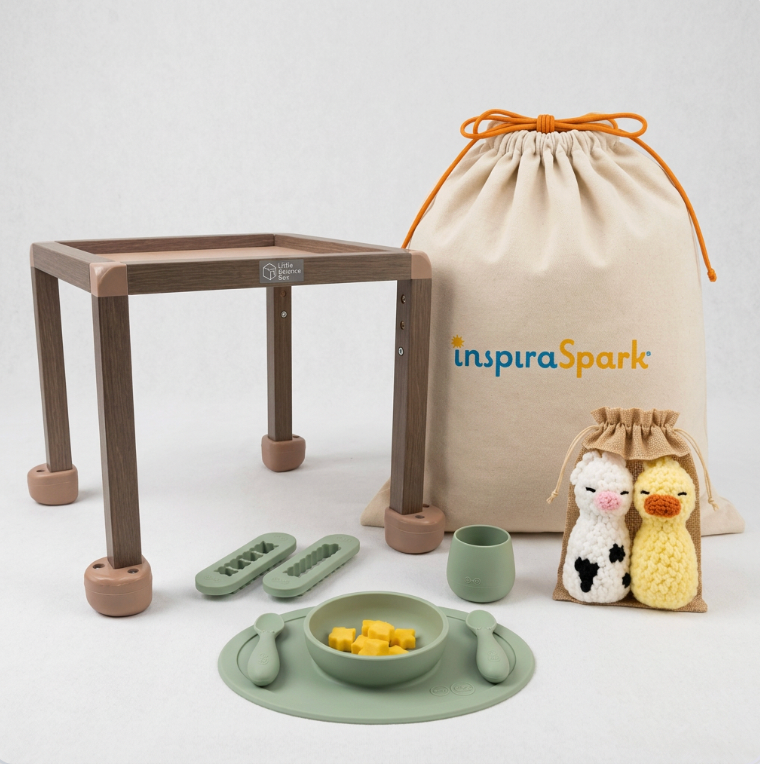
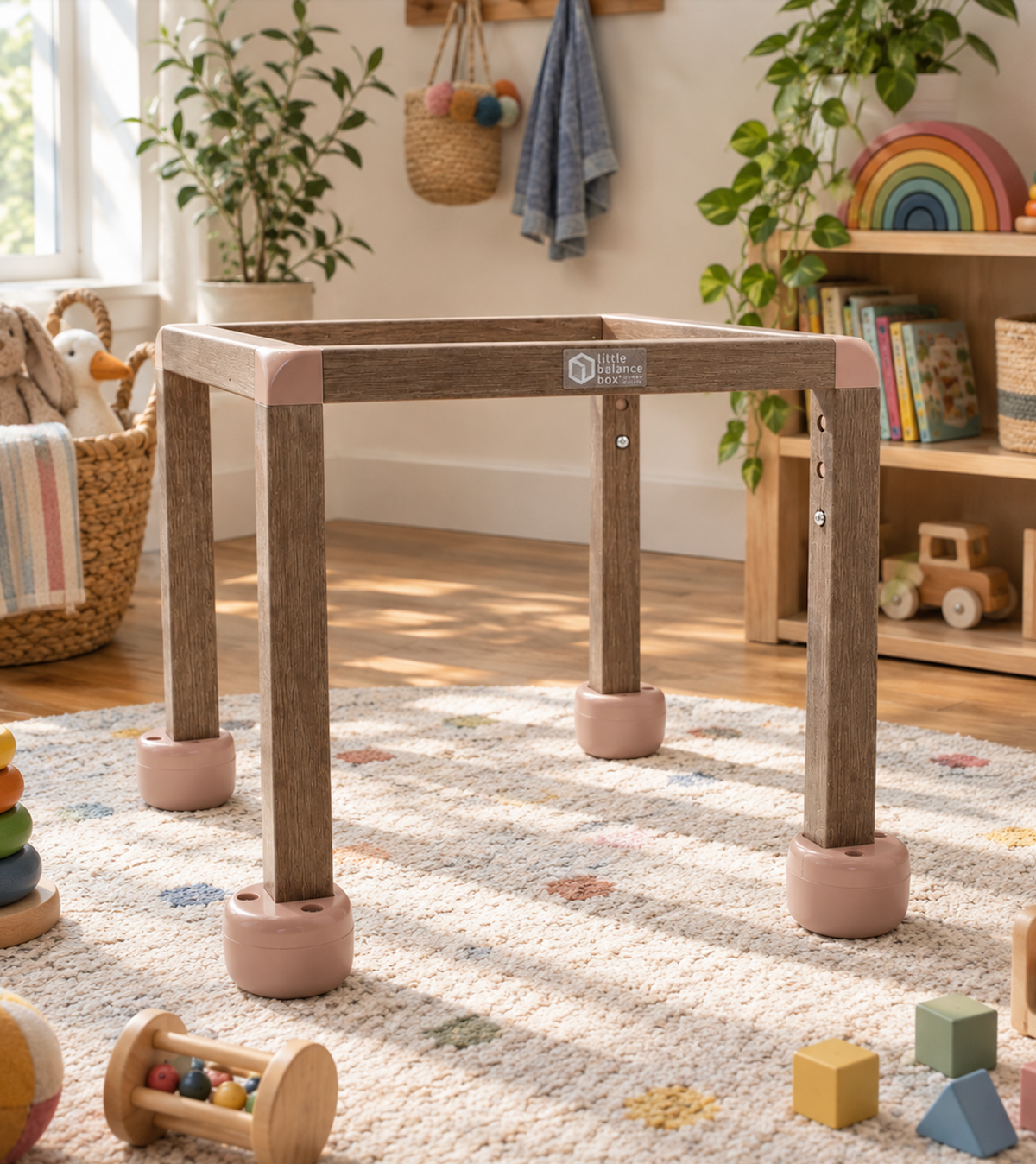
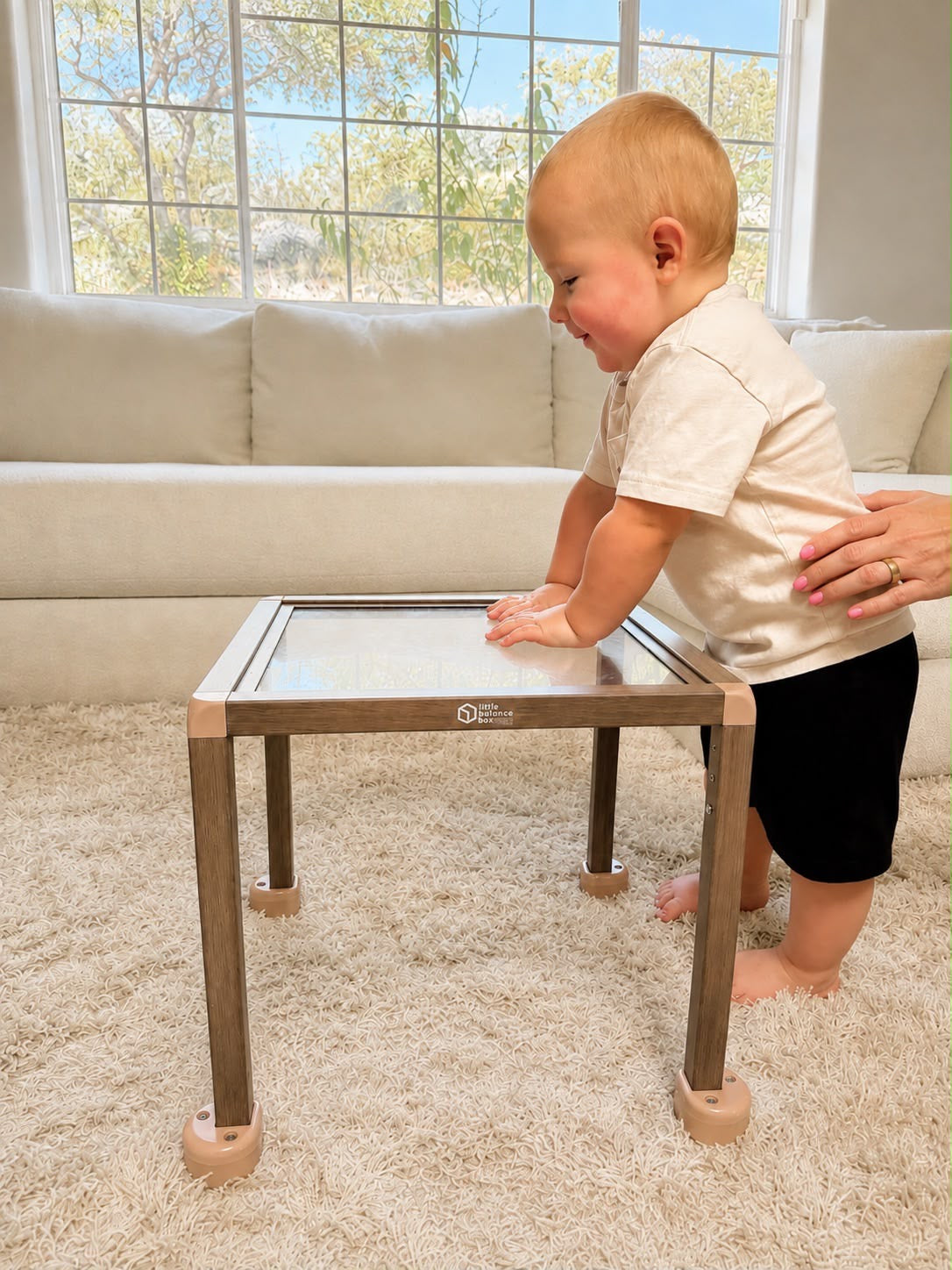
Unos minutos de levantarse apoyándose en muebles estables y seguros o una herramienta de empuje como la Little Balance Box es una manera fácil de empezar. Podrías seguir con unos minutos de deambulación a lo largo de un sofá o una mesa baja, o algo de práctica de pie con el apoyo de los padres. Una sesión corta y supervisada antes de un café, la siesta o la recogida por la tarde puede proporcionar una oportunidad natural y de baja presión para practicar.
Libérate de la mentalidad de la "sesión perfecta"
Es fácil sentir que la práctica de caminar necesita parecer una actividad estructurada: un suelo despejado, un período de tiempo dedicado, todo en orden. En realidad, los momentos cortos y consistentes de práctica supervisada, integrados en tu rutina existente, pueden ser tan valiosos como una sesión larga.
Las temporadas ocupadas como esta son un buen recordatorio de que la práctica no requiere condiciones ideales. Solo requiere oportunidad, un poco de intención y tu atención mientras sucede.
Aquí es exactamente donde encaja algo como la Little Balance Box. Es una herramienta increíble para darle a tu hijo una práctica significativa durante esos cortos períodos a lo largo del día. Con características que apoyan el equilibrio, la coordinación, el desarrollo del core y del suelo pélvico, y la retroalimentación sensorial, está diseñada para que cada minuto de práctica cuente.
Unos minutos aquí, unos minutos allá, contigo justo al lado de tu hijo cada vez. Suma más rápido de lo que crees.
Compartir:
Juguetes de final abierto vs. de pilas: qué dice la investigación
Por qué los primeros años importan tanto: Ayudar a tu bebé a explorar, hablar y moverse