


Por qué la confianza es importante cuando los niños aprenden a caminar
Cuando los niños están aprendiendo a caminar, no se trata solo de fuerza, la confianza juega un papel fundamental.
Muchos niños dudan en dar pasos de forma independiente, no porque no sean capaces físicamente, sino porque aún no se sienten estables o seguros. Esa sensación de incertidumbre puede ralentizar el progreso, incluso cuando todas las habilidades fundamentales están presentes.
Por eso, el equilibrio y las experiencias de movimiento seguras son tan importantes. Cuantas más oportunidades tenga un niño de practicar de forma apoyada y controlada, más confianza adquirirá en su capacidad para moverse por su entorno.
Fomentando la exploración del movimiento
El movimiento temprano debe sentirse natural, seguro y atractivo.
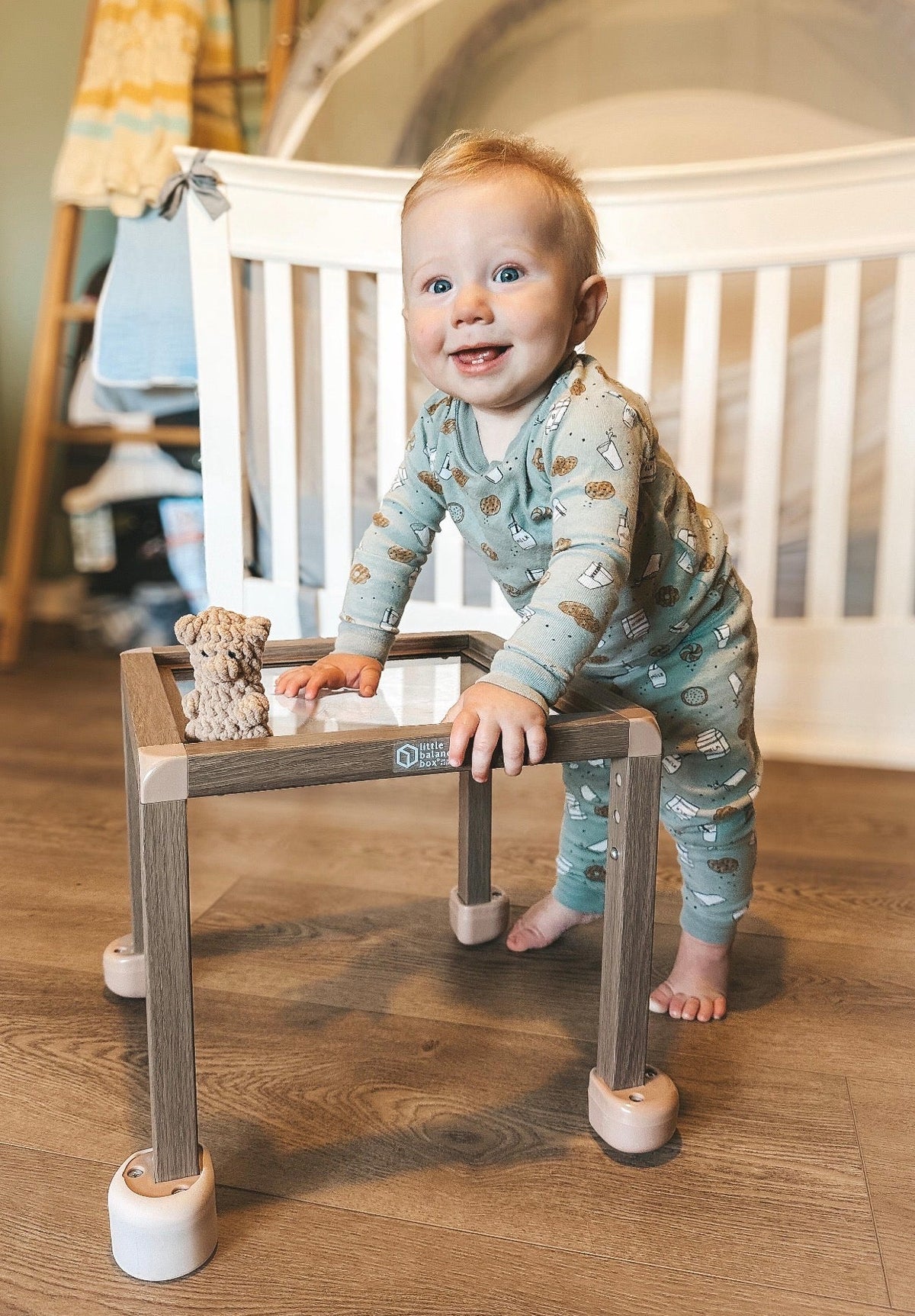
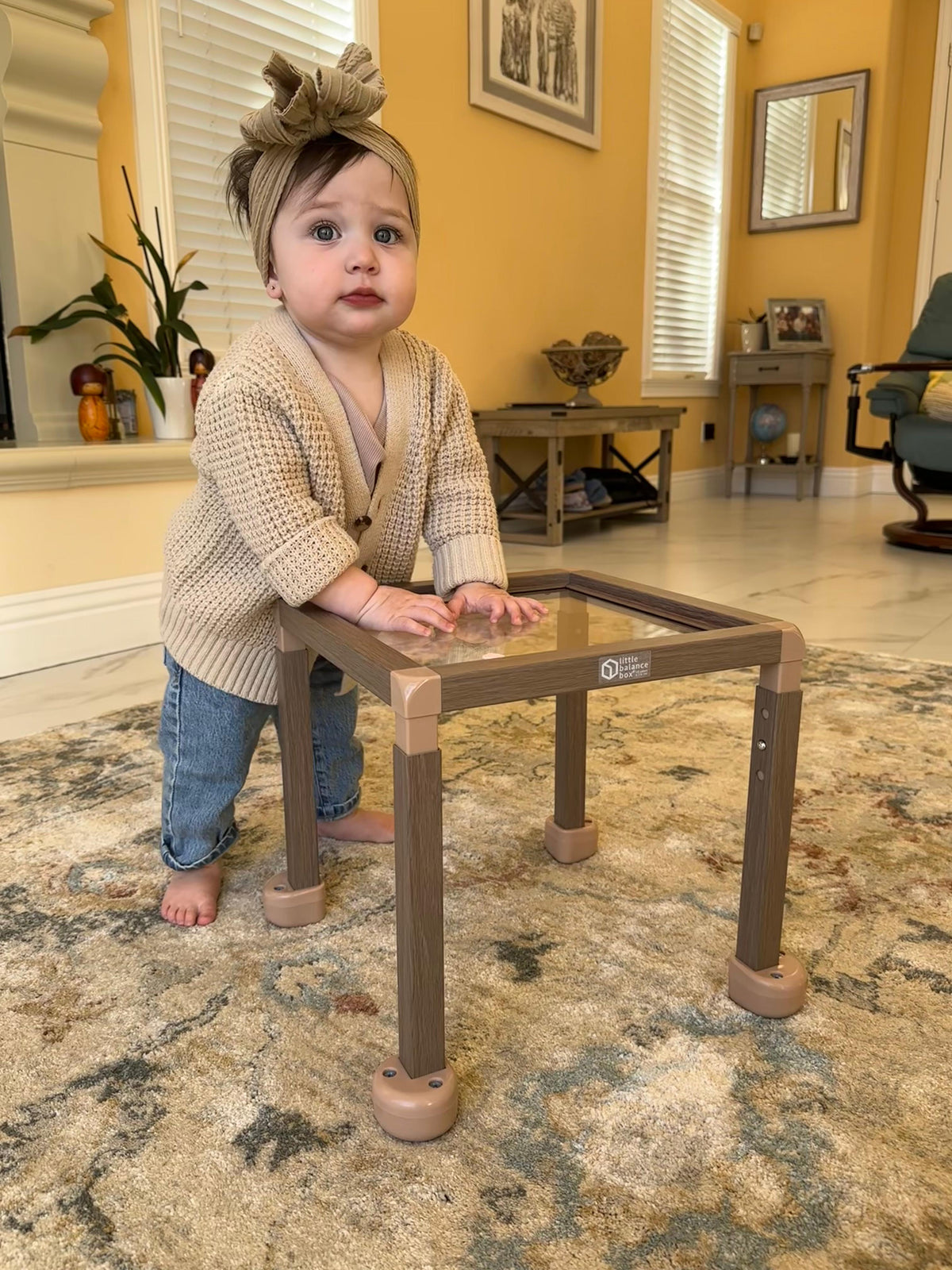
La Little Balance Box Grow anima a los niños a explorar el movimiento a su propio ritmo. En lugar de forzar los pasos, les permite iniciar el movimiento por sí mismos, lo cual es clave para desarrollar tanto la confianza como la coordinación.
A medida que los niños interactúan con ella, practican de forma natural:
- El equilibrio al estar de pie mientras cambian su peso
- El paso coordinado mientras avanzan
- El movimiento direccional mientras exploran su entorno
Este tipo de exploración autodirigida ayuda a los niños a sentirse más en control de sus cuerpos, lo cual es esencial para caminar de forma independiente.
Desarrollo de la fuerza central a través del juego
Caminar comienza desde el centro del cuerpo. Un core fuerte es lo que permite a los bebés mantenerse erguidos, mantener el equilibrio y recuperarse de pequeños tambaleos.
En lugar de ejercicios aislados, la forma más efectiva de desarrollar esta fuerza es a través del movimiento basado en el juego.
Cuando los niños empujan, se inclinan y cambian su peso durante el juego, están activando naturalmente:
- Los músculos del core
- La estabilidad pélvica
- El control postural
La Little Balance Box Grow apoya esto animando a los niños a empujar hacia abajo sobre una superficie estable, ayudándolos a desarrollar fuerza de una manera que se siente intuitiva y divertida.
Apoyo al desarrollo temprano en el hogar
Muchos padres quieren apoyar el desarrollo de sus hijos pero no saben por dónde empezar. La buena noticia es que no requiere rutinas complicadas ni programas estructurados.
Oportunidades sencillas y cotidianas para el movimiento pueden tener un gran impacto.
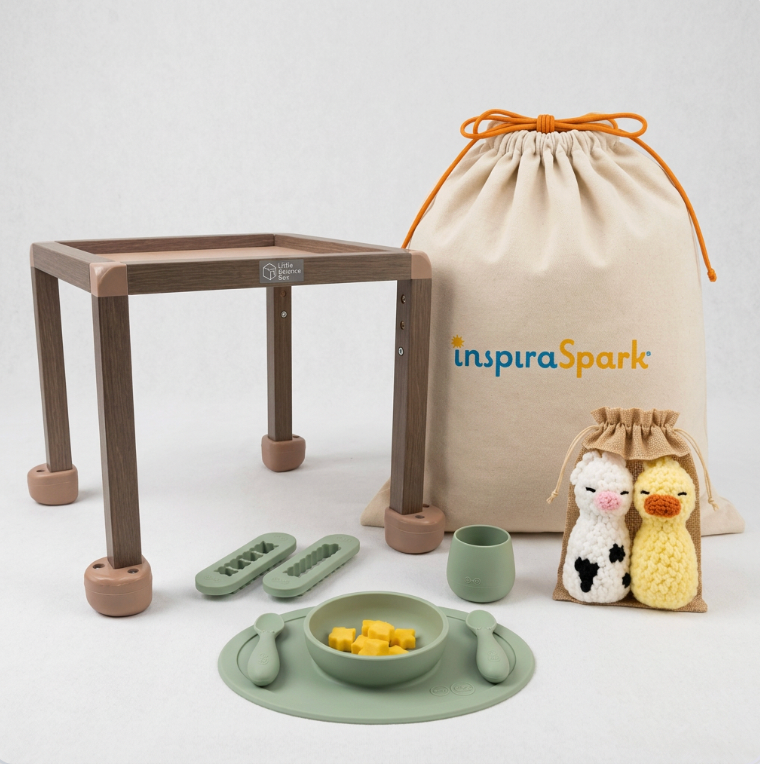
La Little Balance Box Grow se integra perfectamente en el juego diario, dando a los niños la oportunidad de practicar el equilibrio, la coordinación y las habilidades de movimiento en un entorno familiar. Los acompaña en su desarrollo y apoya su progreso a lo largo del tiempo.
Diseñada por una fisioterapeuta pediátrica
Lo que hace única a la Little Balance Box Grow es que fue diseñada por una fisioterapeuta que entiende cómo los niños desarrollan habilidades de movimiento. Cada elemento del diseño es intencional, desde la estabilidad que proporciona hasta la forma en que fomenta patrones de movimiento naturales.
Para las familias, esto significa tener una herramienta que no solo entretiene, sino que apoya activamente el desarrollo de una manera reflexiva y significativa.
Compartir:
¿Cuándo Empiezan a Caminar los Niños? Hitos que los Padres Deben Conocer
Actividades de equilibrio en casa para niños (Guía de fisioterapia)