

When Do Babies Start Pulling Themselves Up to Stand?
One day your baby is happily playing on the floor, and the next, they're grabbing onto the couch and pulling themselves up! It's an exciting milestone that brings them one step closer to walking.
But when do children typically start pulling themselves up, and how can you encourage this important stage of development?
Every child develops at their own pace, so some may start earlier while others need a little more time. Pulling to stand requires more than leg strength. Children use their arms, core, and legs together while developing balance, coordination, and body awareness.
What Comes Before Pulling to Stand?
Before reaching this milestone, children develop several foundational skills:
-
Sitting independently: Builds core strength and postural control.
-
Crawling: Encourages coordination and strength throughout the body.
-
Kneeling: Helps develop lower-body strength and prepares babies for standing.
-
Half-kneeling: Teaches babies how to shift their weight and transition toward standing.
-
Weight shifting: Helps babies develop balance and stability.
Each of these movements contributes to the skills needed for standing and eventually walking!
4 Ways to Encourage Your Baby to Practice
You don't need complicated exercises to support your child's development. Everyday play offers plenty of opportunities!
1. Encourage Floor Time
Give your child opportunities to roll, crawl, reach, and explore different positions. These movements help build foundational strength.
2. Practice Reaching While Kneeling
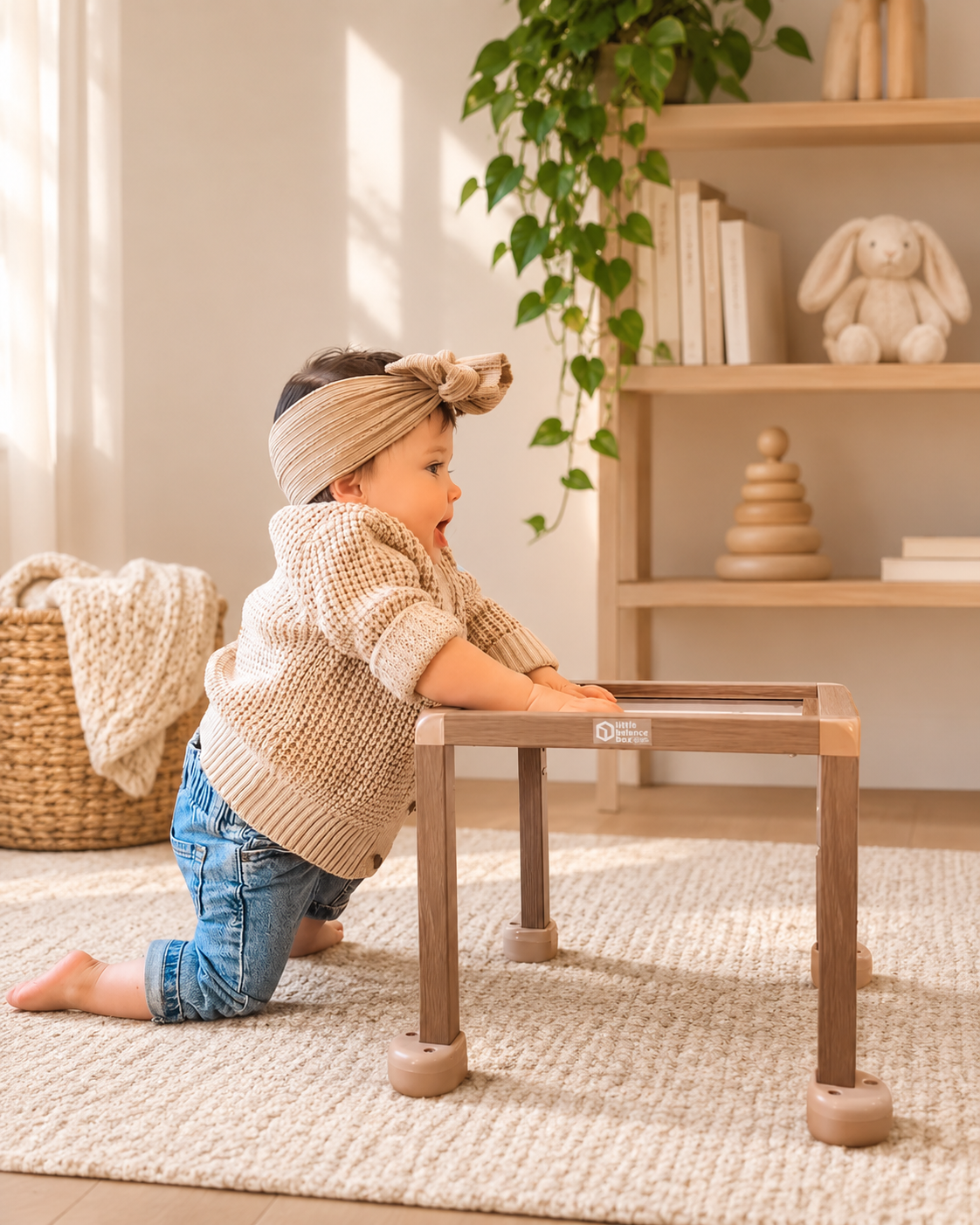
Place a favorite toy on a low, stable surface to encourage your baby to reach while kneeling.
3. Offer Supported Standing Opportunities
Once your baby shows readiness, provide a sturdy, stable surface they can use to explore pulling up and standing. Always supervise closely.
4. Let Them Explore Independently
Give your baby time to experiment with movement and problem-solving. Avoid forcing them into positions they're not ready for.
How the Little Balance Box Supports Early Movement
Designed by physical therapist Dr. Shannon Davis, PT, DPT, the Little Balance Box provides babies with opportunities to explore standing and early movement.
Unlike traditional baby walkers that move around with your child, the LBB features a stationary design that allows babies to explore movement while remaining in control of their bodies.
Some of its unique features include:
-
Spring-loaded feet: Provide responsive feedback as children shift their weight.
-
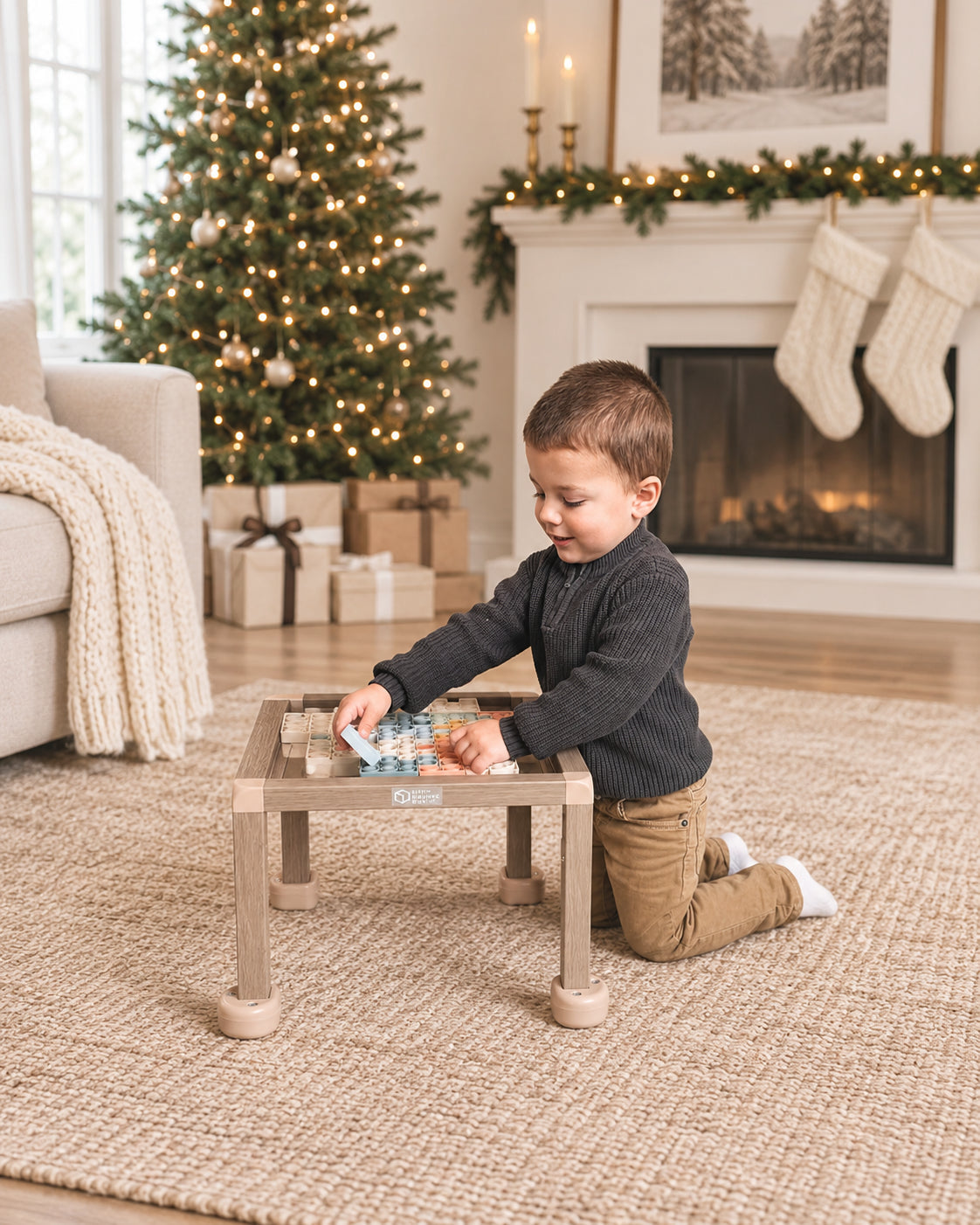
Flat-top surface: Creates an opportunity for reaching and exploration.
-
360-degree access: Allows babies to approach and explore from different sides.
-
Multifunctional design: Transitions into an activity table as your child grows.
The goal isn't to rush babies into walking, but to provide opportunities to build strength, balance, and coordination through play.
Every Little Movement Is Progress!
From sitting and crawling to kneeling and pulling up, every milestone contributes to your child's development.
Remember, walking isn't a race! Give your little one the time and space to explore, practice, and develop at their own pace.

Compartir:
Why Sensory Play Is Important for Your Baby's Development
The Ultimate Baby Development Gift Guide: Black Friday Edition